Angela Moorad, MS, CCC-SLP. Over 36 years experience in AAC. OMazing Kids AAC and app consulting. Creator of several AAC Feature Matching resources (https://omazingkidsllc.com/omazing-kids-aac-resource-links/). Includes info about unique features to support Gestalt Language Processors
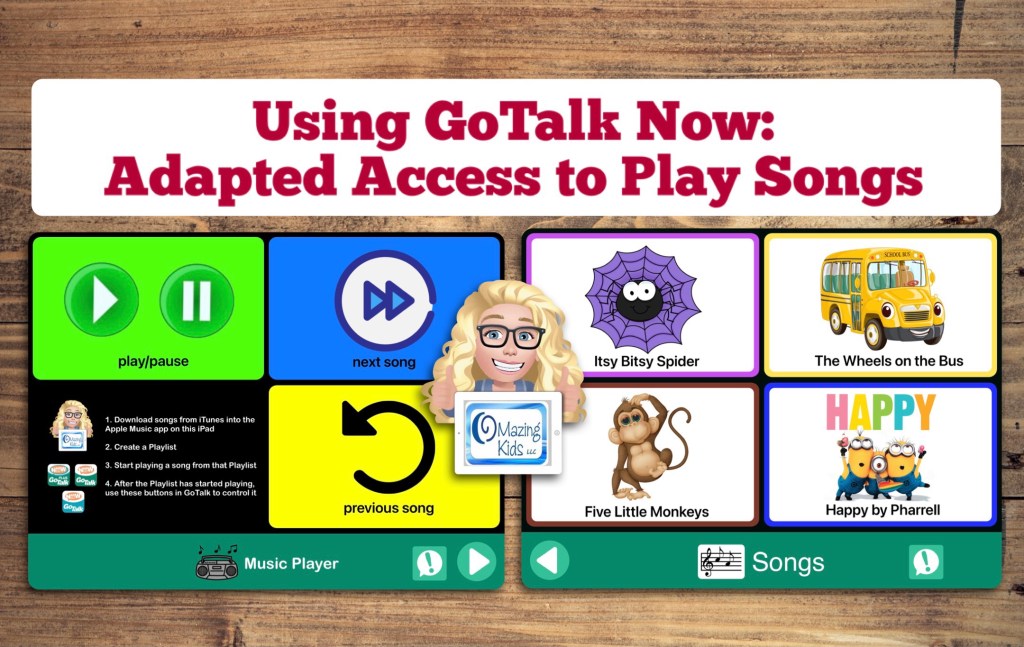
One of my favorite uses for the GoTalk Now app by Attainment Company, Inc. is to create boards to use as an adapted means of access to play music.
This video shows how to create a music player board (play/pause, next song, previous song), how to create a song board with buttons to play specific songs, and using the Expanded Quick Buttons as a means to comment or request and as a means to go between the two boards (instead of swiping or using paging buttons)
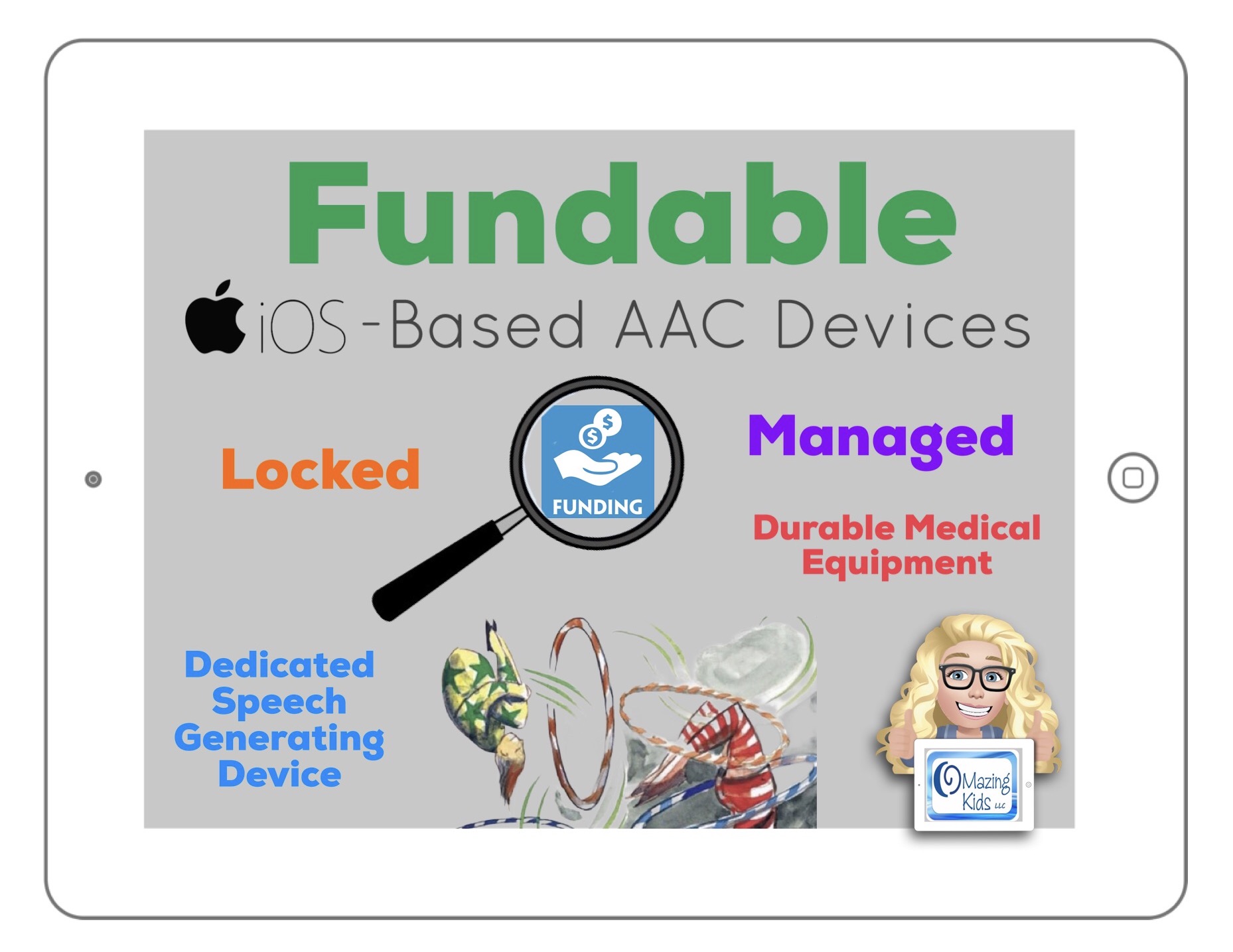
Wanting to get a bundled iPad with a robust AAC app in a durable case funded as a “dedicated” SGD (speech generating device) / DME (durable medical equipment) through Medicaid or insurance?
There are several companies that offer locked/managed/dedicated iOS based devices with a variety of iOS AAC apps as an option. You’ll need to contact each company’s funding department to find out if they are in-network for the funding sources that you are considering. This varies state-by-state:
See this announcement on 10/23/25 about Avaz joining the PRC-Saltillo community.Their blog post specifically answers the question about whether or not the app will now be available as an option on their SGDs: https://www.prc-saltillo.com/articles/avaz-acquisition?mode=view
“Will I be able to get the Avaz app on a Via/NovaChat device?” This will depend on what part of the world you are in! For example, Avaz will not be available on Via or NovaChat devices within the United States or the European Union due to certification requirements. Please check with your local representative for more specific information.“
(My note: I checked the EyeTech websiteon 10/23/25 and it still shows that the Android version of Avaz is available on their fundable Android-based EyeOn Go (direct access via touch) and EyeOn Air (eye tracking access) SGDs: https://eyetechds.com)
If you are considering TD Snap, Tobii Dynavox has the following information on their website (https://us.tobiidynavox.com/products/td-snap): “Tobii Dynavox cannot guarantee the compatibility of TD Snap with any other brand of hardware, and as such, Tobii Dynavox will not offer technical support for hardware compatibility issues related to TD Snap installed on non-Tobii Dynavox approved hardware, by non-licensed resellers. Downloads by individuals of TD Snap for individual use on personal devices is permitted pursuant to the TD Snap License Agreement for Download. TD Snap may only be downloaded for re-sale and re-distribution by Tobii Dynavox resellers with a specific license to do so. To download TD Snap for commercial use, re-sale, and re-distribution on non-Tobii Dynavox devices contact Tobii Dynavox directly at css@tobiidynavox.com in North America and order.eu@tobiidynavox.com in all other countries.”
For those wanting to make an app-only purchase, as of 5/21/24 the only option for *new app-only purchases* available to the general public to purchase TD Snap is via what was formerly called TD Snap Lite (renamed to TD Snap). There is a 30-day free trial and then a subscription is required. Separate additional subscriptions are required if you need PODD pagesets, Gateway pagesets or METACOM symbols. You can see the subscription prices in the description for this app in the App Store.
The “TD Snap AAC” app (full version that used to be available for $49.99) is no longer available for *new purchases*. Those who previously purchased it can find it in their purchases.
Organizations that have an Apple Business Manager or Apple School Manager account and meet the necessary Tobii Dynavox requirements can complete a form to submit a request to purchase the TD Snap Enterprise app for iPadOS. Once submitted, that request will be reviewed by Tobii Dynavox, and you should receive a response within 10 business days. The price for TD Snap Enterprise is $149.99. This comes with: Pageset editing, speech output + the PODD pagesets. Link: https://www.tobiidynavox.com/pages/td-snap-enterprise-allowlist
Several companies that sell traditional SGDs also offer their own iOS-based devices:
If a particular company has a waiting list to borrow a loaner device to trial then you may want to also check with the AT Lending Program in your state.
All states in the USA are supposed to have an Assistive Technology Lending Library program where parents & professionals can borrow AAC devices, iPads with AAC apps & other AT for short-term trial. It’s a great way to try various options out before making purchasing decisions. Find the AT Lending Library in your state:https://www.at3center.net/stateprogram
Even if your state’s program isn’t loaning out equipment due to the pandemic they might have the option to do a short term loan of the software/app.
Another “bundled” option is the Talk Tablet. Based on my experience, that app is not very intuitive to program or to use but I am sharing the info here in case anyone is looking for a less expensive alternative in situations where a funding source isn’t available. Their website is geared towards private pay but be sure to compare the cost of what they offer vs. just putting together your own by buying an iPad, AAC app & case: https://gusinc.com. The iOS version of the app: https://apps.apple.com/us/app/talktablet-pro-autism-aphasia/id1436382584 (+ extra cost of adding a high quality voice via in-app purchase)
We are fortunate in Oklahoma that SoonerCare / Medicaid will consider funding an iPad with a robust AAC app in a durable case as a SGD / DME but they require us to try the full version of the app in order to do a complete feature-match, submit a video of the patient using it and extensive justification as to why that particular option us being recommended. Here in Oklahoma, we can typically only get funding once every 5 years for AAC (with very rare exceptions) so it’s very important to be able to get a good match for that individual’s needs. See details here: https://www.okabletech.org/community/soonercare-provider-for-speech-generating-devices/
{Note: This video is a couple of years old so be sure to check with Oklahoma AbleTech about the current process and requirements}
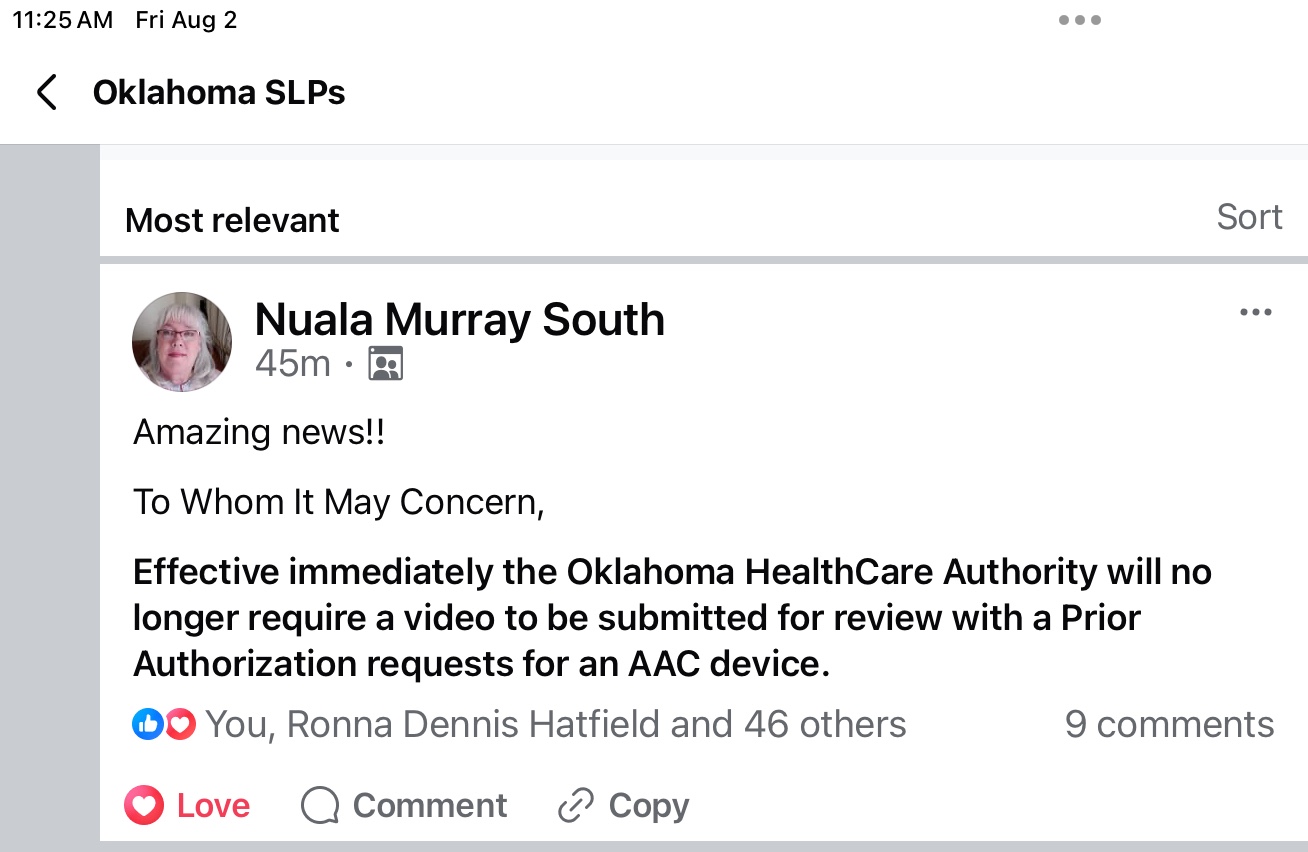
Update 8/2/24: I just saw a post from our Tobii Dynavox rep in Oklahoma:
Amazing news!!
To Whom It May Concern,
Effective immediately the Oklahoma HealthCare Authority will no longer require a video to be submitted for review with a Prior Authorization requests for an AAC device.
Another source that I’ve had good success with for funding an iPad with a robust AAC app in a durable case here in Oklahoma is the New Voices grant through Ability Connections Oklahoma:https://www.acok.org (the funding comes and goes on this grant. See their Facebook page for updates: https://www.facebook.com/abilityconnectionoklahoma/).
If you are in Oklahoma, also check out the AAC Funding Guide: https://www.okabletech.org/resources/at-funding-guide/ (those outside of Oklahoma should ask the AT Lending Program in your state if they have a similar resource)
It is best practice to do an AAC eval, feature matching & trial of options. It is important to try out any device and app with the potential user before making a purchasing recommendation or decision. This is also important when using any extra hardware (keyguards, switches, switch interfaces, carrying straps, stands, mounts, etc…) to support AAC use. Many funding sources require documentation regarding a certain number of options being considered and trialed. It is wise to get as much information as you can before you start the process.
The funding department for the company selling the devices should provide info regarding what’s needed. Read through the definition of “medical necessity” and all the required elements for purchase of a speech generating device (SGD) as durable medical equipment (DME) for that insurance company and/or Medicaid in your state. This will give you both verbiage to include in your report and a checklist of all the bases you need to cover.
Once you start the funding process you have to be willing to do what it takes under very short timeframes when they request additional video or ask for an addendum for additional information. If you don’t meet their very short timeframes then the request may automatically be denied and you may have to start all over. If you get a denial, find out why and submit an appeal.
There are many reasons why one would consider a traditional SGD vs. an iPad or any other tablet with an app: durability, warranty, tech support, built-in switch ports for scanning, eye gaze access, etc… (see more info at: https://bit.ly/3sUNINw)
But there are many folks who may not have a funding source for a traditional SGD. And there are things about having AAC on an iPad or iPhone that make it a great option for particular users.
There are situations where you may need to consider an Android tablet instead of an iPad. I recently received info about that platform having many more voice options compared to the iOS voices or voices within AAC apps on an iPad. In some instances an Android tablet may be the only option for voice output in a particular language. An example of this is Vietnamese. Which explains why the Vietnamese version of Avaz & Talk Tablet are only offered on that platform. CoughDrop can be translated into that language but only has access to a Vietnamese voice on the Android platform. (Updated 1/30/23: iOS 16 added voices for several more languages including Vietnamese). See info about Android AAC apps on this post: https://omazingkidsllc.com/2020/12/01/android-aac-apps/
Disclaimer: I assume no liability for device or app purchases and am not making patient-specific recommendations.
The best way to reach me with any questions is via messaging on the OMazing Kids Facebook page: https://www.facebook.com/OMazingKidsAAC/. That way AAC related messages don’t get lost among the spam in my e-mail
Update 7/5/25: I have deactivated 4 handouts on TPT and am working on a new free handout that will have all of the information in one handout. I’ll announce when that’s ready.
————————————————————————————————————
{AAC Tips} How SLPs can get FREE access to AAC apps, AAC app user groups, funding options & more! (2021 Edition)
I’m doing a simplified version of this blog post. Each section will now be a separate blog post and then will be listed alphabetically and linked here. The focus continues to be on iOS AAC apps but there will also be some linked posts about AAC options on other platforms (Android, Windows, Amazon Kindle Fire, etc.).
An AAC eval should include consideration and trials of traditional SGDs. You can contact your local AAC vendor reps for training and to borrow an SGD for short term loan.
A good AAC eval should also include consideration of features uniquely available in AAC apps but folks don’t often know how to get access to those. So I continue to feel the need to share info about that to help my fellow speechies build a better equipped AAC toolbox. I retired from clinical practice and am now doing AAC consulting.
The problem is even if there is a free or low cost lite version of a particular AAC app, it is not the same as trialing the full featured app. How can you do a true feature-match when you don’t have all the features? Many SLPs see the prices in the App Store and assume they would have to personally purchase apps or try to get their facility or school to do so. Well unless you work in some mythical setting with unlimited funds or have a well established booming private practice, it’s unlikely that you would be able to afford very many AAC apps. Not saying they are overpriced. App developers have significant costs related to keeping robust AAC apps updated and paying licensing fees for high quality symbol sets and voices. So we shouldn’t expect these apps to be priced at the same level as other speech therapy apps or kids educational apps.
Update 8/24/20: Set up a free MyTobiiDynavox account and go through the steps to verify your status: https://www.mytobiidynavox.com/#/morestuff/professionals. Look on their website and Facebook group for current resources. Their website changes frequently so if any links are not working do a search on their website or ask in their group.
See these posts for info about how to activate the free voice output in the free version of the app:
1/13/21: See this video on the Tobii Dynavox Technical Support YouTube channel regarding how to fix the voice output if it’s not speaking: https://youtu.be/dE4Zkr6ev5w
11/22/20 Updated post about how SLPs can activate voice output in the free version of the Snap Core First AAC app
Update 11/10/20: Snap PODD & Snap Gateway have been added and SLP’s with a verified MyTobiiDynavox for Professionals account can access both for free within the Snap Core First app. See step by step tips on how to access these on this post: https://www.facebook.com/174264525957894/posts/3622621321122180/
.
They also have this free companion app filled with videos, tutorials and tips. It’s a very large app so make sure you have plenty of free space and a strong WiFi connection before downloading: Pathways for Core First by Tobii Dynavox LLC, https://itunes.apple.com/us/app/pathways-for-core-first/id1187433636?mt=8
But don’t stop there. You need more than 1 tool in your AAC toolbox. If you are a SLP that frequently does AAC evals and makes purchasing recommendations, then many other AAC app developers will provide you with a free promo code for their app so you would be able to trial it with patients.
How to get codes for AAC apps: The process for doing this is a little different for each app. I always start by contacting that developer via Facebook messaging on their FB page for that app. If I don’t get a response there, then I look on their website for an e-mail address or to see if they have a formal process for requesting a copy of the app. This info can be difficult to find so dig a little. It takes some time but is well worth it. I am a SLP at a non-profit facility that does tons of AAC evals and purchasing recommendations. I have been able to get most of the main AAC apps and therefore have lots of options to trial during AAC evals. Feel pretty tech-geeky spending evenings and weekends doing this but it’s worth it to have access to lots of AAC options that then result in good AAC matches for the kids I serve.
Update 8/24/20: I am now retired but am staying up to date on features in AAC apps in case I decide to do some consulting work and so I’ll be equipped in case any family members ever need AAC. . Here is an alphabetical list of AAC apps that I have gotten by going through this process and the way(s) I contacted those app developers. I hope I haven’t left anyone off the list. If I have, feel free to send me a message. There is not room to keep all the AAC apps loaded on my iPad at the same time so I rotate them on/off based on my patient’s needs. Most AAC apps are very large so I always suggest that SLPs get an iPad with the largest memory you can afford. Even with two 128GB iPad Airs, I am still constantly playing the “app shuffle” where I delete apps to make room to install others. I will be updating this list as I get new AAC apps:
aacorn & aacorn+ (Facebook messaging)
AAC Genie (Facebook messaging)
AlphaTopics (Facebook messaging)
Avatalker (Facebook messaging)
Avaz Pro (combo of Facebook messaging & e-mail)
BridgeBuilderAAC (Facebook messaging)
Click ‘n Talk & Talk’n Photos (Facebook messaging)
Clicker Communicator with SymbolStix & Clicker Communicator with PCS (Facebook messaging)
CoughDrop (the app developer contacted me)
Custom Boards (Facebook messaging)
GoTalk Now Plus by Attainment Company (combo of Facebook messaging & e-mail)
GoVisual Scene Maker by Attainment Company (e-mail)
Grace – Picture Exchange for Non-Verbal People (the app developer contacted me)
Grid for iPad by Smartbox Assistive Technology (combo of Facebook messaging & e-mail)
iESLp (combo of Facebook messaging & e-mail)
image2talk (Facebook messaging)
InnerVoice (Facebook messaging)
LAMP Words for Life (combo of Facebook messaging & e-mail. The key was to reach out to the app developers John & Cindy Holloran directly. I spent over a year with no success contacting PRC. You have to go through LAMP trainings prior to getting a code. Updated 8/24/20: new link to application: https://aacapps.com/partners/apply)
Make a Choice – AAC Buttons by pkclSoft (received a promo code after helping to beta-test this new app)
Mighty AAC (got it while it was free)
My First AAC (e-mail)
Niki Talk, Niki Talk + Tweet, Niki Music (adapted way to play music) & Niki Video (adapted way to play videos) (Facebook messaging)
PECS Phase III & PECS IV+ (e-mail – I had helped coordinate bringing a PECS workshop to our facility so that definitely helped)
Picture AAC (Facebook messaging)
Predictable, Scene & Heard & ChatAble (combo of Facebook messaging & e-mail)
Proloquo2Go & Proloquo4Text (AssistiveWare provides a free copy of the iOS and Mac versions of their AAC apps to Speech-Language Pathologists who conduct AAC evaluations on a case-by-case basis. Because they get a limited number of codes, they typically have a waiting list and prioritize requests based on caseload and geographic location. To request getting on that waiting list, SLPs can e-mail support@assistiveware.com. This same process applies to their simPODD app but it provides SLPs with a 1-year subscription (doesn’t include printing) and they will need to request access to simPODD each year).
Say Some More AAC Plus (combo of Facebook messaging & e-mail)
SayIt! (text to speech) (Facebook messaging)
See Me Talk (combo of Facebook messaging & e-mail)
simPODD (e-mailed AssistiveWare at support@assistiveware.com – received a free One Year Digital subscription – cannot print)
Snap Scene (it took multiple attempts to finally get connected with the right person at Tobii Dynavox to get a code for the full version)
So Much 2 Say (Facebook messaging)
Speak For Yourself (Facebook messaging)
Talk Tablet US (contacted this e-mail address: gusinc@me.com. Updated 8/24/20: That version of the app is no longer available for purchase. Instead they have a TalkTablet LITE – Eval Version for $1.99 and a Pro paid version. I don’t have either of those)
Tools2Talk+ (combo of Facebook messaging & e-mail)
Total Talk (e-mail) (Update 8/24/20: the app disappeared for several months from the App Store and then a revamped version relaunched as Talk Suite Pro)
TouchChat HD with WordPower (contacted my local Saltillo rep via e-mail. Find your rep: https://saltillo.com/reps. A word of advice… You really need the version that includes WordPower)
Verbal Me & Verbal Me Español (website contact form)
The key is being persistent. If one contact method doesn’t work, then try another. Another key is building relationships on social media. I put quite a bit of time and effort into liking and sharing posts from app developers pages, announcing when they have app sales and even doing reviews and hosting giveaways for them on my blog and social media sites. Some app developers may require proof of you being a SLP (keep in mind that they may have received numerous requests for a free app from parents or AAC users). The other thing to keep in mind is that app developers only get a certain number of promo codes when they release an app or an update to that app. So if they currently don’t have codes, check back again later. Often good to ask right after an app has been released or it has been updated when they would have a fresh batch of codes. . Despite numerous attempts, I have not yet been successful in getting access to the full version of following AAC app. Which means I can’t recommend it since I have no way to trial the full featured version during an AAC eval nor do I recommend it when therapists or parents ask about AAC options in the numerous Facebook groups that I participate in since I haven’t used it:
Sono Flex (the free lite version has some interesting features but can’t make purchasing recommendations off that for the full app. The app has not been updated since 2014 so it will be interesting to see if still exists after iOS 11 is released. Updated 8/24/20: they finally updated that app in March 2018 but have made it clear that their focus is on updates and support for their Snap Core First app)
.
Other AAC apps that I have and use:
2Talk – AAC (got it while it was free)
AAC Expression Toolkit
Alexicom AAC (free. They also have several different paid apps. The app developer has indicated that they have purposefully released several apps specific to certain ages, genders & symbol types to keep the app sizes small and affordable. They will be adding info to their website to help SLPs and parents figure out which app might be best suited to a particular user. Update 8/24/20: This app developer also has several apps specifically designed for adults in medical situations.)
BRIDGE Communication – both the Lite and Pro versions (bought both when it they were on sale, it has some cool articulation pages built into it, can add video clips to buttons, several other unique features, has a Spanish option in the settings, has SymbolStix symbols, has a history of being updated frequently, price is very affordable for an app with this many features)
CanTunes (free, music choice boards, adapted means of accessing music on your iPad)
CardTalk (free & got the IAP to unlock all functions while it was free)
ChatterBoards AAC
ChoiceBoard – Creator
Choice Board Maker
Choice Boards
CommBoards
Communicate Easy
Communication Adventure – An app for communication training for caregivers of children with complex communication needs
CoreVoice – AAC Core Board
EESpeech Basic
Emergency Chat
Flip Writer AAC (and the Flip Writer Pocket iPhone version)
FreeVOCA
GoTalk Now Lite (free, has good features for a lite app. Often recommend it as an option while we are working on getting other options in place)
Grid Player
iHear PECS: Animals (bought it, a bargain for $1.99)
iSpeak Button Collection (bought it, $5.99, large full screen round button (looks similar to a BigMack), swipe screen to see the next button, up to 15 buttons)
Leeloo AAC – Autism Speech App
LetMeTalk
MenuAssist (free)
MyTalkTools Mobile Lite
PAROL (Has several additional features that are cool: an interactive pain scale (same content as the Doloris app that disappeared from the App Store several years ago), a visual timer, a visual sequence page, the ability to print a PDF of picture symbols, etc.)
PAROL Mini
PhotoVOCA (had gotten an older version while it was free… then was able to udate to the new version for free)
PictoMaker
Picture Card Maker PLUS (got it while it was free. The app developer is in the process of releasing a major update for it)
PlayButton (free, https://appsto.re/us/WZ2lC.i. This FREE app is one of my faves for use as a single message VOCA. The activation area is very large (almost the entire screen). I use Guided Access to lock the “record” button to prevent accidental activations during use. Update 8/24/20: They added a place in the iPad Settings for this app to toggle off the recording button)
Posco AAC
Quick Type AAC (bought it, a bargain for $1.99)
Smooth Talker AAC
Sono Flex Lite
SoundingBoard (free)
Sorenson BuzzCards (type and show, no voice output, designed for hearing impaired to use to quickly communicate with those who don’t know sign)
Speak – Text to Speech
Spell Better – Literacy Support (includes text to speech)
Spuble – creating live speech bubbles (very unique voice to text app that transcribes what a person says so another person can read it on the screen)
SymboTalk – AAC Talker
TalkBoard Free
Talk For Me – Text to Speech
Talking Button by Masanori Kubota (got while it was free)
Tap Chat
TapSpeak Button Plus (won it in a giveaway on PrAACtical AAC)
Tom Taps Speak – AAC for Kids
Touch Switch (bought it, $4.99, play any music downloaded onto your iPad with full screen round button. Also plays eye catching animations. Really more for “cause & effect” but thought it was worth mentioning)
Verbally (free)
Voice4u TTS
Whiteboard – nothing more, nothing less
Widgit Go Basic
YesNo – questions made simple
Yes or No Communication
Yes/No
Yes / No Button Free
There are several other AAC apps that I have gotten when they were free for a day or two. When I see one, I download it to try out before deciding if it is worth sharing on social media. There are some apps in the App Store that claim to be AAC but are so poorly designed that I chose not to post about them.
Updated 8/24/20 – AAC apps for communicating about pain & medical situations:
PAROL by Les Applications C, Inc https://apps.apple.com/us/app/parol/id1472197509 (has an interactive pain scale with same content as the Doloris app that disappeared from the App Store several years ago)
Updated 8/24/20: Keyboard Extension Apps: It may be helpful to consider using a keyboard extension app that would make the iOS iPad Keyboard easier to use with features that are special needs friendly.
Keedogo by AssistiveWare, https://apps.apple.com/us/app/keedogo/id915829477, $.99 (My favorite keyboard extension app with lots of customization options. Good for beginning typists since it doesn’t have word prediction or auto correction. If you want additional features the look at the next two apps….
SuperKeys Accessible Keyboard by Crick Software, https://apps.apple.com/us/app/superkeys-accessible-keyboard/id917216287, $12.99 (A very unique keyboard that enlarges quadrants and then you select a large key within it. Nice for those with vision or fine motor needs but can also be helpful for those overwhelmed by looking through the entire field of keys. The SuperKeys keyboard is built in as an option in all of the Clicker Communicator AAC apps. Phonics Keyboard by Therapy Box Limited, https://apps.apple.com/us/app/phonics-keyboard/id1031514501, $2.99 (There are also some fun activities within the app)
SwiftKey Keyboard by SwiftKey, https://apps.apple.com/us/app/swiftkey-keyboard/id911813648, FREE (for more advanced typists who want a full PC style keyboard with the ability to customize the color for sensory needs, customization options, ability to swipe to type, has a nice “real keyboard” feel, the description shows IAPs for additional keyboard styles but as far as I can tell everything is included now. I’m currently using the “Nickel Classic Dark” theme as a nice alternative to the iOS iPad keyboard.)
FYI… There are a few AAC apps that use the iOS iPad Keyboard and therefore would allow for a keyboard extension app to be used. Examples include: Speak for Yourself, Proloquo2Go, Mighty AAC, ChatAble, Proloquo4Text, Predictable, Voice4u TTS, QuickType, Flip Writer, HandySpeech and several other text-to-speech (TTS) AAC apps. Exploring alternative keyboards can be a game changer for making typing as a means of AAC accessible. You may also want to explore accessibility features in the iPad settings (https://support.apple.com/guide/ipad/get-started-with-accessibility-features-ipad9a2465f9/ipados), styluses, adapted styluses, keyguards, external Bluetooth keyboards, etc. Take a look at Lauren S. Enders’ well organized Pinterest boards for ideas: https://pin.it/TWn9w6P (styluses: https://pin.it/t4cy8XV; keyboards & keyboard cases: https://pin.it/NydPTE8). I highly encourage you to collaborate with an Occupational Therapist and/or Assistive Technology Specialist when exploring AT options for the iPad. Some of that equipment is pricey so you want to make good decisions that fit that individual child’s needs. You may want to try things out in order to make those decisions. Check with the AT Lending Library in your state: https://www.at3center.net/stateprogram. Many have iPads, specialized apps and AT equipment available for short term loan to try out before making purchasing recommendations.
Free web-based AAC open source options (can be used online and some offer an offline option, may work across platforms):
* AsTeRICS Grid – open source web-based AAC: https://grid.asterics.eu/#welcome. Has the option to set up offline users. Uses voices available on that device or platform. On my iPad the iOS voices showed up as options. The editing is different from what I’m used to so there is a learning curve to get up to speed. Just beginning to explore this option.
* CBoard – open source web-based AAC: https://www.cboard.io. Cboard works on modern browsers and is available on a wide variety of platforms, including desktops, tablets and mobile phones. Offline support is available on Google Chrome (desktop & Android). There is an Android app (see above). Support for up to 33 languages (vary by operating system). Uses open source Mulberry Symbols. More info about features (vary by operating system): https://www.cboard.io/help/#Features & info about how to program and use it: https://www.cboard.io/help/. FYI…. you’ll want to do some editing if you are in the USA. Several of the items are named differently here (ex: biscuit -> cookie, ice lolly -> popsicle, chips -> fries, crisps -> chips, etc.).
* OptiKey – open source Windows eye-tracking and communication tool: http://www.optikey.org, https://github.com/Optikey/Optikey/wiki. Optikey is an assistive on-screen keyboard which runs on Windows. It is designed to be used with a low cost eye-tracking device to bring keyboard control, mouse control and speech to people with motor and speech limitations, such as people living with Amyotrophic Lateral Sclerosis (ALS) / Motor Neuron Disease (MND). Includes support for the CommuniKate symbol communication boards. More info: https://github.com/Optikey/Optikey/wiki/Support-for-CommuniKate-boards & http://communikate.equalitytime.co.uk. CommuniKate is designed for people who rely heavily on the environment or context in order to communicate effectively but understand concepts and language used in conversation and during everyday activities.
Affordable web-based AAC open source option (can be used in a web browser online and works in apps across multiple platforms – iOS, Android, Amazon Kindle, Windows):
CoughDrop – open source cloud-based AAC: https://www.mycoughdrop.com. They offer a free 2-month trial. After that it’s either a monthly subscription (currently $6.00 per month). Info about other pricing options: https://www.mycoughdrop.com/pricing. They often offer a 50% off discount on the Lifetime Subscription fee in April (Autism Acceptance month) & October (AAC Awareness month). They frequently add new board options and do a good job of keeping the app updated. This is the only affordable AAC option that I’ve seen that can send the text and symbols together in a cohesive message via iMessaging and e-mail. Other higher priced AAC options that can send both symbols & text as a cohesive message: Avaz (in iMessaging and e-mail) and the Clicker Communicator apps (as a PDF either by AirDrop or e-mail. MyTalkTools is the only AAC app that I’ve seen that actually has an iMessaging app component where the app works within iMessaging… but each symbol is messaged separately.)
Windows: You can install CoughDrop as a Windows desktop app on your computer or Windows device. CoughDrop on Windows has some eye-tracking integrations that will help it work better with more devices. Please make sure to download the right version for your operating system. https://www.mycoughdrop.com/download
Web Browser: CoughDrop is a web-first application, and should work with many modern web browsers.
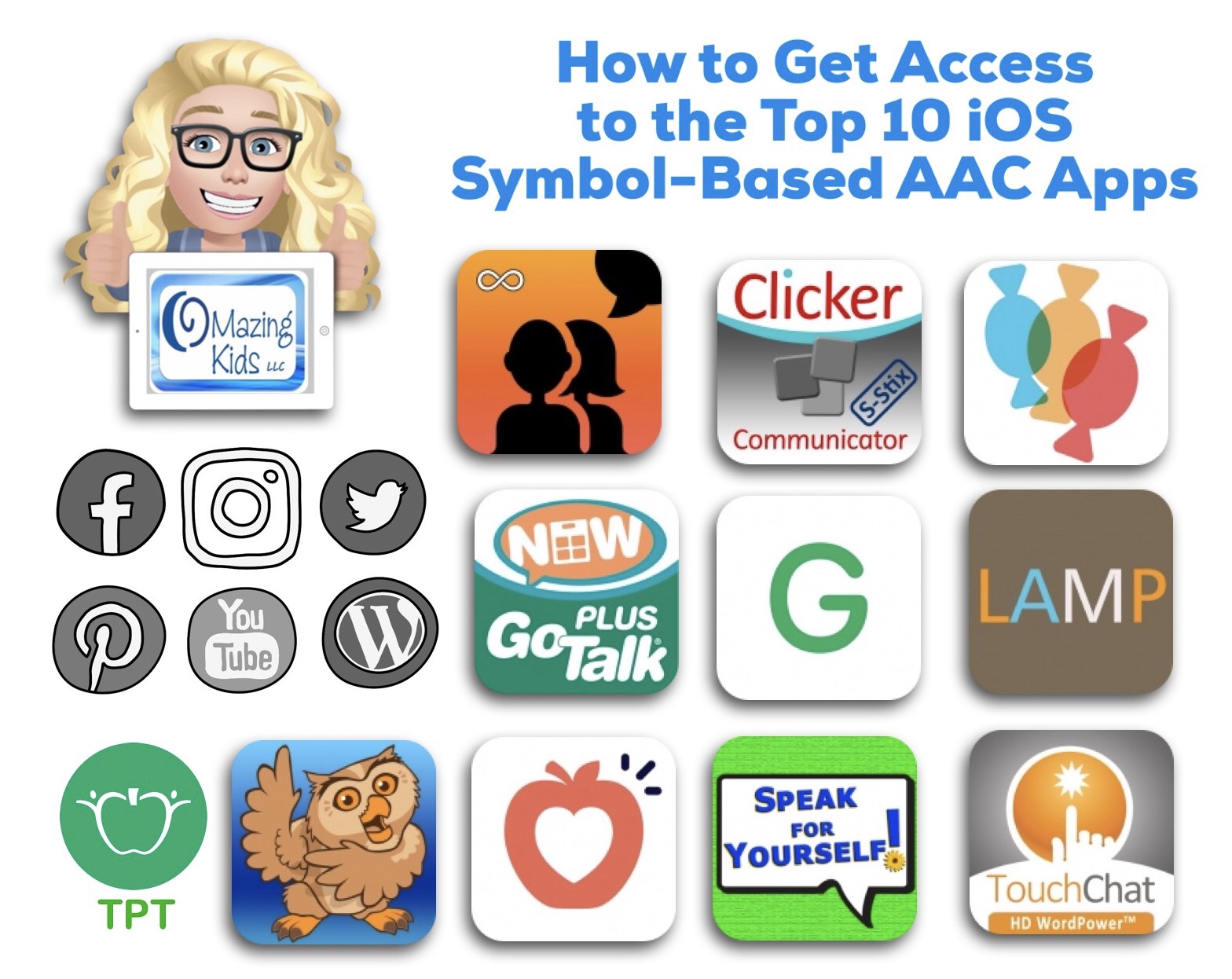
What are my “favorite” AAC apps? I have several based on the features available in them. I know the list above looks overwhelming and I did not get these apps all at the same time. So here is some advice as to where to start in your quest to acquire AAC apps. If I had to narrow down the list to the top 10 robust AAC apps that stay loaded on my iPad all the time and have been a good match for several patients that I serve… they are (list updated 8/24/20 – subject to change as apps are updated with new features and other apps are released):
Avaz Pro
Clicker Communicator with PCS (and the version with SymbolStix)
CoughDrop
GoTalk Now Plus
Grid for iPad
LAMP Words for Life
Proloquo2Go
Snap Core First
Speak for Yourself
TouchChat HD with WordPower
I think of these as the most common tools in my AAC toolbox (like a hammer, pliers, saw, tape measure, drill, level, screwdriver & wrench are common tools at home). The rest are still very important “specialty” tools in my toolbox. They are fabulous for meeting less common and very specific needs. Think of an Alan Wrench. Not something you use very often but when you need one it is the only tool that will meet that need. And sometimes the best solution is a combination of several tools. Remember…. Good builders pick tools based on the task.
Feature Matching:
So I bet you are thinking “oh my goodness… how on earth can I learn about all the features to do a feature-match with so many options?”. The apps I have listed above are just the tip of the iceberg. There are hundreds.
Updated 8/24/20:
The best way to keep up to date on the features in AAC apps is to have access to them and use them frequently. You can also gain helpful info in the user groups for apps on Facebook, videos released by the app developer and several resources listed below:
SET BC Supported AAC Device Comparison Chart April 2019 (their documents only include info on the apps and devices that they use but is still a helpful example and fairly recent): https://bit.ly/31qPo42. They also have a Feature Matching: Linear and Auditory Scanning (February 2019): https://bit.ly/32nIP1E & SET BC AAC Software/Apps with Visual Scenes: Comparison Chart (February 2019): https://bit.ly/3jcykF1
FYI…. features change rapidly as apps are updated or companies release new devices. So as soon as any resource list like these are published it likely already has something outdated in it.
But finding fairly recent documents like these at least gives a good starting point when comparing options in a feature match process. Tip: If a document you find online isn’t dated be sure to look at the iOS requirements listed in the features. There are VERY old charts that date back to iOS 4 that I saw that are totally outdated and are not an accurate or fair depiction of those apps.
FYI 2: I haven’t found any document that contains info on every AAC app or device so it’s important to research and consider ones that may not be on a particular list.
This Feature Match Comparison Chart from the Oklahoma Assistive Technology Center is helpful: https://bit.ly/3hs27cl
http://bit.ly/EndersAACAppsPart1 . AAC APPS: Considerations for Selecting, Customizing, & Getting Started – Part 2 – Lauren Enders (May 15, 2019) – includes 2 robust motor-plan based AAC apps (LAMP Words for Life & Speak for Yourself), 1 robust cloud-based app that’s a mix of folder-based with influences of motor-planning (CoughDrop), plus info about other types of AAC apps (including a nice overview of unique ways to use the GoTalk Now app)
http://bit.ly/EndersAACAppsPart2 . Also this archived presentation by Christine Baudin: Comparing & Contrasting 5 Common Robust AAC apps – TouchChat with WordPower (focusing on 108 & 20 location page sets), Proloquo2Go (focusing on 7×11 grid), Snap Core First (focusing on 8×10 grid), LAMP Words for Life (84 location) & Speak for Yourself (120 location) – 2018 AAC in the Cloud
Unfortunately the AAC Ferret app that had been so helpful in searching for apps by specific features no longer exists. Word is the app developer ran into funding issues. Even if you still have that app loaded on your iPad, it no longer works. That app truly was a fabulous tool. My hope is that maybe it will reappear one day or that someone else will develop a tool like that.
My next “go to” resource used to be Jane Farrall’s website with her AAC app lists (http://www.janefarrall.com/aac-apps-lists/). Unfortunately she took that part of her website down since she no longer had time to keep updating it and the lists were outdated. It used to have several amazing lists:
Symbol/Picture apps – These are apps that have symbol based pages but don’t make text-to-speech available to the person who uses AAC.
Symbol & Text Based apps – These are apps that have symbol pages and make text-to-speech available to the person who uses AAC.
Text Based apps – These are apps that make text-to-speech available to the person who uses AAC or that have text only communication pages.
.
Funding:
Wanting to get a bundled iPad with an AAC app in a durable case funded as a “dedicated” SGD through Medicaid or insurance? Your best bet is to check with the funding departments at these companies. They all offer iOS based devices with a variety of AAC apps as an option:
We are fortunate in Oklahoma that Medicaid will consider funding an iPad with a robust AAC app in a durable case as a SGD / DME but they require us to try the full version of the app in order to do a complete feature-match, submit a video of the patient using it and extensive justification as to why that particular option us being recommended. Here in Oklahoma, we can only get funding once every 5 years for AAC (with very rare exceptions) so it’s very important to be able to get a good match for that individual’s needs. See details here: https://www.okabletech.org/community/soonercare-provider-for-speech-generating-devices/
Another source that I’ve had good success with for funding an iPad with a robust AAC app in a durable case here in Oklahoma is the New Voices grant through Ability Connections Oklahoma: https://www.acok.org (the funding comes and goes on this grant. See their Facebook page for updates: https://www.facebook.com/abilityconnectionoklahoma/).
There are key times of the year that AAC apps tend to go on sale and I always share that info on my OMazing Kids Facebook page and in the AppPeeps group. Some app developers choose to do sales and others do not. When I have inquired about that, they reply that they feel their app is fairly priced given the ongoing costs related to keeping it updated and licensing fees for symbol sets and voices.
Why do many AAC apps cost so much? Drives me a little nuts when I see unkind comments regarding pricing of well designed AAC apps. Where else would we demand that something be put on sale or even worse demand that it should be free? Really?! The well designed robust AAC apps are a bargain even at full price if you stop to really think about being able to get a “voice” for a patient for a tiny fraction of the cost of traditional SGDs. It has been a game-changer and allowed many parents to be able to no longer have to wait on a SLP to be the decision maker / gatekeeper. Many parents post about “going rogue” in buying an iPad, AAC app & durable case for their child after being told they weren’t “ready” for that. News alert…. the old school mentality of there being a “hierarchy” that a child has to go through to “prove” they are “ready” for robust AAC is antiquated. Not saying that every AAC app or SGD is a good match for every child but I am saying that the days of kids with very complex needs being stuck with just a single message VOCA or a few PECS symbols have to end. See this presentation from Jane Farrall: http://www.janefarrall.com/lets-communicate-plenary-presentation-at-qaselcon16/ , this post about “What is “Beginning” AAC?“: http://www.janefarrall.com/what-is-beginning-aac/, and this powerful post on the Uncommon Sense Blog’s Facebook page: http://bit.ly/230RT5r. .
What about parents who want to try out AAC options? I highly recommend that you pursue an AAC eval with a SLP who has expertise in this area. Many larger school districts have an AAC team. But don’t feel that you have to wait if you are a parent who has been told “no” and want to proceed on your own. It may just be a little trickier to determine what the best AAC option will be for your child since most parents don’t have unlimited resources to buy several AAC apps to try. All states in the USA are supposed to have an Assistive Technology Lending Library program where parents & professionals can borrow AAC devices, iPads with AAC apps & other AT for short-term trial. It’s a great way to try various options out before making purchasing decisions. There are lots of great AAC devices and apps. It’s important to do a good feature-match and trial of options. Find the AT Lending Library in your state: https://www.at3center.net/stateprogram
The AT Program in your state may also know of SLPs who do AAC evals and funding resources specific to your area.
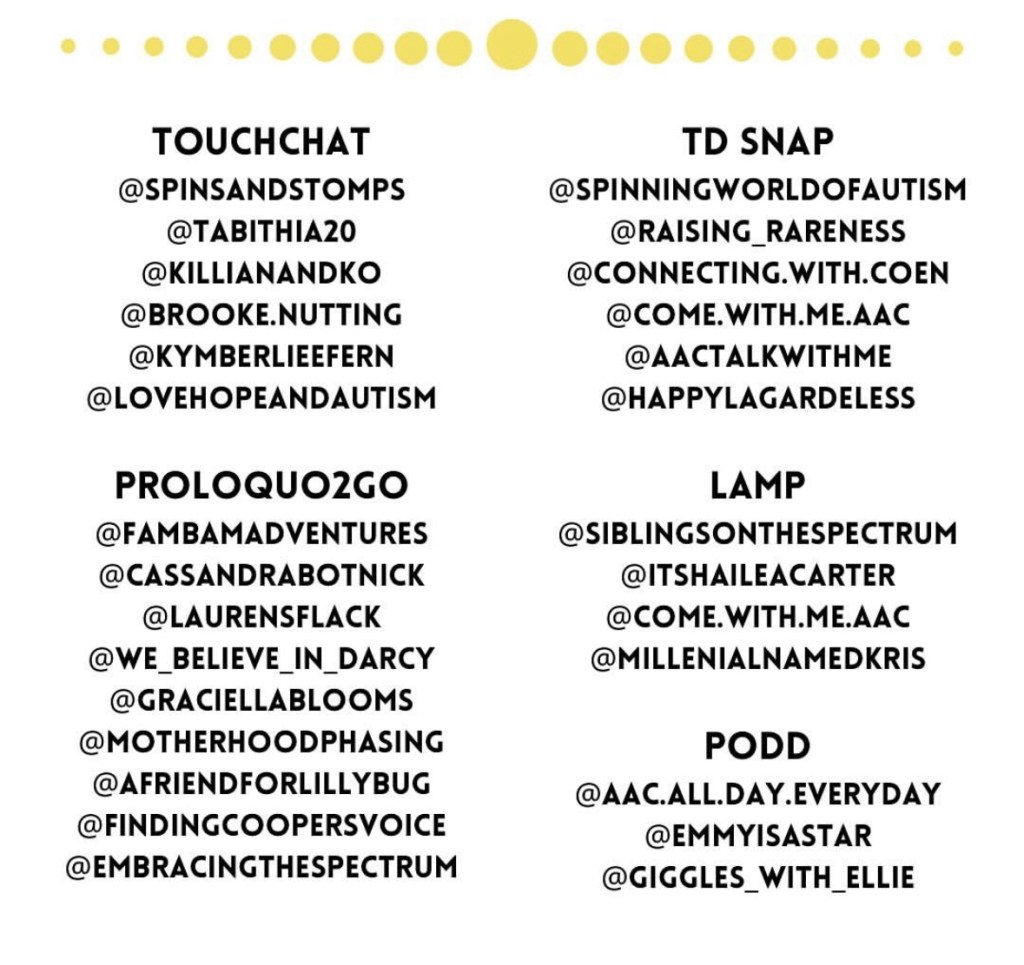
Need support with using an AAC app? Most app developers have a Facebook group for that app. I highly suggest joining these groups for an incredible amount of support from the app developers as well as other parents, therapists & teachers. Every group has it’s own “culture”. Some are very open to discussing any topic. Others are pretty strict about only posting info or questions directly related to that particular app. Here is a list of the Facebook app user groups (updated to include support groups for traditional SGDs & PODD):
I have suggested to the developers of the GoTalk Now app that a group be started but so far I’ve only seen a parent led one in Swedish. I have also suggested to the developer of the new Total Talk AAC app that they start a group. He was very open to the idea so I hope to see that soon.
There are also numerous other AAC-related Facebook groups. Again each having it’s own culture and dynamic. I’m not going to list all of those here…. but if you are a SLP, I definitely suggest joining the AAC for the SLP group: https://www.facebook.com/groups/1539830846285663/. Also take a look at the 21st Century AAC Practitioners group: https://www.facebook.com/groups/475548015977014/. If you see me “tag” Lauren Enders in a post or comment, it’s because I know that she has a wealth on knowledge about AAC apps, cases, mounting options, etc. You should seriously follow her on Pinterest: https://www.pinterest.com/lasenders/. I also know that she will provide an unbiased opinion and always comments in a very supportive way.
You may also see me “tag” Carole Zangari from PrAACtical AAC for the same reasons. http://praacticalaac.org/
.
{AAC Assessment} “Just like driving a car, when you’ve been doing AAC assessments for a long time, you almost don’t have to think about the details of what you are doing. I automatically pull out the devices and apps, YouTube, iPad, snack, bubbles and wind-ups, and start playing. Unfortunately, it is less than helpful to tell people new to AAC to just play with students and watch what they do. In an effort to describe our process, I created a data sheet to break down the steps, and typed up the procedures and suggested apps.” This post by Vicki Clarke from Dynamic Therapy Associates Inc on PrAACtical AAC is full of awesome tips for AAC assessment! I was excited to get new ideas for several apps that I already had and was inspired to buy an app that’s been on my “wish list” for awhile. I will also confess to buying the hippo toy pictured. It’s been on my “wish list” for awhile too (gotta love shopping on Amazon with free shipping). 😉
What’s the best AAC approach?What’s the best dedicated speech generating device? What’s the best case? What’s the best ______….. Several times a week I am either asked this question or I see it posted in one of the many AAC Facebook groups I follow. Occasionally it seems to end up in a rather heated debate of ______ vs. ________. Even arguments over core vs. fringe vocabulary. For a balanced approach in use of core & fringe vocabulary, check out this fabulous post on PrAACtically AAC: http://praacticalaac.org/praactical/the-baby-the-bathwater-and-core-vocabulary/. This is counterproductive. Although there are key best practices when considering AAC options, there is not any one best AAC option (or one best therapy approach, or one best anything) when it comes to best meeting individual needs. I have added a lot of tools to my toolbox over my 26+ year career as a speech-language pathologist. There have been pivotal moments where new tools were added that forever changed my perspective. Although shiny new tools may be exciting they did not replace the old tried & true tools. The exciting thing about tools is that you can use them together to build & repair. Would it make sense to ask “What’s better…. a hammer or a drill? a saw or a tape measure? a wrench or a flashlight? Of course not. Each tool has it’s specific purpose. You select the tool based on what job you need to accomplish. . Have questions? The quickest and most reliable way to reach me is via Facebook messaging on my OMazing Kids page. Thank goodness it seems to be immune from spammers unlike my e-mail. . Are you an AAC app developer? I’d be more than glad to help beta test your app and then post about it when it is released for sale. I don’t charge a fee. Just would need a free promo code for the full version of that AAC app so I can add it to my toolbox. I never post about apps that I haven’t tried out first. Oh and a word of advice to app developers… state run facilities and schools have difficulty with in-app purchases or subscription-based apps as do potential funding sources such as Medicaid or insurance companies. So you will have a wider audience if you also offer a full paid version of your AAC app.
.
I am asked pretty frequently for my thoughts on AAC app development. Here is my advice:
Any new AAC app needs to support robust communication for a wide variety of functions. There are already lots of simple choice making apps on the market.
Take a good look at the major AAC apps on the market and determine what specific features your new app would offer that are not already available.
Do lots of beta testing to insure the app is intuitive / easy to use. Even with the best intentions some AAC apps never take off. An example is Total Talk. It has several unique features but is not very intuitive to use and they initially only let you pick one voice (that has since changed but they lost the initial momentum that comes with a new app release). (Update: 8/24/20 – It was nice to see the Total Talk app revamped and relaunched as “Talk Suite Pro”. The app has some unique features so hopefully it will make it this time)
You only should offer an AAC app that is truly worth having and meets needs. There are several free or very cheap AAC apps on the market. But you rarely see them mentioned or recommended because they are so poorly designed.
Determine what platform you will develop the app for (iOS or Android). It’s very rare for app developers to be able to tackle both platforms and do it well. Most AAC app developers stick with the iOS platform because it is uniform and thus easier and less costly to develop apps for.
Beyond the initial costs of developing the app, make sure that you also have a very well thought out long term plan and finances for supporting and keeping an AAC app updated. I’ve received numerous messages on my OMazing Kids page from parents and therapist with very heartbreaking stories of AAC users losing their voice when iOS 11 came out. Several small AAC app developers had not updated those apps in almost 5 years. It’s one thing to lose a favorite game or therapy app but a whole different thing to lose an AAC app.
📥 Want to suggest iOS AAC apps to be added to this post? The best way to reach me is via Facebook messaging over on my OMazing Kids page.
If it’s a free app, please send the link from the USA App Store so I can download and try it out. If it’s a paid app and you are the app developer, please send the link from the USA App Store so I can look at the info before you send a promo code. I want to make sure that one of my iPads or iPhone is compatible in order to try it out.
If you see info or links that need to be updated on this post, feel free to send me a Facebook message on my OMazing Kids page.
Inclusion in the “Top 10” was based on features, long term availability in the App Store, good history of being updated, having patients who benefited from using the app, gathering data from app recommendations from SLPs who have expertise in AAC, etc. The list was purposefully limited to the top 10 in order to keep it manageable for updates as apps continue to add features in the future. I plan on maintaining and updating the chart for the foreseeable future to help meet the need for current and comprehensive info to be used in feature matching. Inclusion of particular apps is subject to change based on features and an ongoing track record of support and updates. The purpose of this chart isn’t to name a “best” app since the “best” AAC for that individual is the combination of options (variety of apps, SGDs, no-tech, etc.) that meets their needs at that moment in time. This chart is not intended to imply that any app not on this list is not well designed or serve a very important function.
You may not copy any part of this document (including the content, layout, format, ideas or design) and reproduce it or distribute it as your own work.
Please do not copy/paste this info onto other blogs or save this PDF in any online groups or files. Instead, feel free to share the post from my blog or social media sites or the link to my TPT store.
I assume no liability for app purchases and am not making patient-specific recommendations.
Personal Professional Facebook Page (linked to OMazing Kids): https://www.facebook.com/angela.moorad (adding“friends” who have a direct role in AAC or Assistive Technology – AAC / AT app or product developers, AAC / AT consultants, SLPs who specialize in AAC, other professionals who specialize in AAC or AT, etc.)
The Assistive Technology Industry Association (ATIA) has a nice directory of AAC & AT Companies. It’s quite helpful when you are searching for info but may not know the name of a particular company: https://www.atia.org/about-atia/membership-directory/. I browse through there frequently to see what’s new.
It’s important to connect with the local vendor reps / consultants for your area. They can provide free training, help you access devices for short term loan, help connect you with their funding department for questions about how to navigate through that process, etc.
Once you navigate to a particular company’s website it can take a little digging to find your local vendor rep / local consultant. So here are links to where you can find that info for companies selling AAC speech generating devices:
Disclaimer: I am not liable for any purchasing decisions. This list is provided for informational purposes only. It is NOT an endorsement of any particular companies. It is critical that AAC and AT professionals and other potential customers research options and ask vendors questions. It is especially important to ask about warranties and what support will be available after the AAC user receives their device.
Your state’s AT Lending Program can be a good option for borrowing equipment for short term loan (especially when you need to try items from a company that doesn’t have a loaner program or what you need isn’t currently available)
Found a broken link, want to recommend a company be added, or have a question? The best way to reach me is via Facebook messaging over on my OMazing Kids page: https://www.facebook.com/OMazingKidsAAC/
Are you a parent or caregiver who wants to try out AAC options for your child? I highly recommend that you pursue an AAC eval (including feature matching and trial of options) with an SLP who has expertise in this area.
This is not meant to put up a roadblock or to “gate keep”. I like to compare it to decisions made regarding wheelchairs. Could you just go pick one out and buy it? If you had the money, sure. But it may not be the best “fit” for that person.
But don’t feel that you HAVE TO wait.
Unfortunately it’s still common to see comments from parents and caregivers who have been told “no”, “only after we try _____”, or “only after they demonstrate ________ skills”, etc.
Another reality is not every parent or caregiver will have access to this type of evaluation. This may be even more challenging in the midst of the pandemic despite the best efforts of SLPs to provide these services remotely.
It may just be a little trickier to determine what the best AAC option will be for your child since many parents don’t have unlimited resources to buy several AAC apps to try.
If your child is a Gestalt Language Processor, be sure to also read the section specifically related to Gestalt Language Processing & AAC at the end of this post.
I am not implying that a free or inexpensive app is always the ideal way to meet most communication needs. But these can be helpful to use until an AAC eval can be completed, a more robust option can be purchased, to meet a short term need or as a secondary tool to offer features that might not be available in their main AAC app, etc..
You may need to use a combination of several apps and add it to existing communication such as True Object Based Icons (TOBIs), facial expressions, gestures, vocalizations, etc. That individual can then pick what methods work best for them in any given situation. We all use various modes of communication (words, gestures, emojis, texting, drawing, etc).
Even when choosing a free or affordable AAC app you’ll want to consider the features that will best match that individual’s needs
Here are some resources that can help you make informed AAC purchasing decisions prior to purchasing more expensive AAC apps:
All states in the USA are supposed to have an Assistive Technology Lending Library program where parents & professionals can borrow AAC devices, iPads with AAC apps & other AT for short-term trial. It’s a great way to try various options out before making purchasing decisions. Find the AT Lending Library in your state: https://www.at3center.net/stateprogram
Even if your state’s program isn’t loaning out equipment due to the pandemic they might have the option to do a short term loan of the software/app.
The AT Program in your state may also know of SLPs who do AAC evals and funding resources (including grants) specific to your area.
You can learn about AAC apps by joining the various AAC user groups on Facebook and watching free webinars on the company’s website or YouTube channel.
Note: If you own an AbleNet QuickTalker Freestyle provided by AbleNet you need to ask for support in their QuickTalker Freestyle Community group (https://www.facebook.com/groups/918051228958948/?__n=K) and use their customer service: https://quicktalkerfreestyle.com. Since they sold the device they need to provide all of the support for both hardware and software/apps.
Updated 6/24/25: AbleNet announced as of Monday July 7, 2025 that Facebook group will be discontinued. Folks can join one of their other groups:
AbleNet QuickTalker Freestyle SLP Community Group:
Note: I hope they reconsider this decision. The most helpful AAC groups that I’m in are ones where everyone is welcome and supported vs. segmenting them like that.
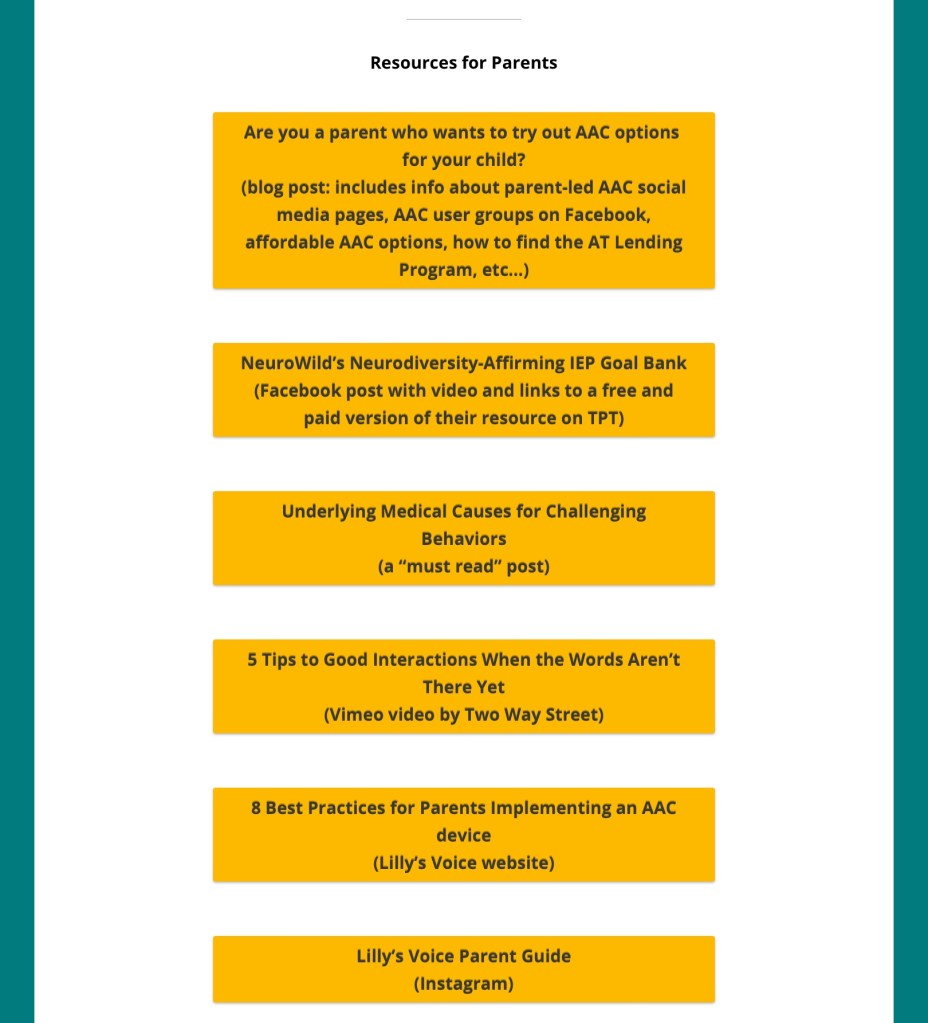
Great video from Two Way Street: “5 Tips to Good Interaction When the Words Aren’t There Yet”
You can see the pricing history for any iOS app in the free AppRaven app (gives you an idea of the pattern of when it goes on sale): https://apps.apple.com/us/app/appraven-apps-gone-free/id1490607195. Many AAC apps tend to go on sale in the USA in April (Autism Awareness / Acceptance Month) and in October (AAC Awareness Month).
I have several free resources available on Teachers Pay Teachers:
I’ve received lots of messages from parents asking what the “best” AAC app is for Gestalt Language Processors. I wish there was a simple answer for this but there isn’t.
Of the thousands of AAC users that I’ve worked with each one had unique needs. For some it was the language(s) that app needed to support, the method of access (tapping to select, drag and release to select, switch scanning, head tracking, eye gaze, etc.), how many navigational hits it took to get to a word, the sensory aspects (type and color of symbols, voice options), etc… This was in addition to unique features that might be helpful for GLPs.
That’s why it’s important to consider the bigger picture of all of their needs and hopefully try a few AAC options before making a purchasing decision.
If you are a parent and don’t have access to an SLP to help you navigate the AAC app options, feel free to message me on my OMazing Kids AAC Consulting Facebook page. I’m glad to answer basic questions about AAC apps and share links to unlisted YouTube videos related to those apps.
Why are those videos unlisted? Those particular videos were created as part of my in-depth feature matching resources that are primarily designed for SLPs and other professionals. Of course anyone can purchase them but they might be way too much info and overwhelming for those just getting started with AAC. I don’t want parents to feel like they have to purchase that type of resource just to see the videos.
So parents please message me if you’d like to see a video about a particular AAC app. I answer quickly on my Facebook page.
I’m not currently offering in-depth virtual AAC consultation or coaching but may consider doing that at some point in the future.
I have over 33 years of experience in AAC, have used almost every iOS AAC app in the USA iTunes (Apple) App Store, Android AAC apps, Amazon Fire AAC apps, Windows AAC apps, web-based AAC apps + lots of AAC-related apps. I am always glad to share what I know about the features in these apps and refer you on to where you can get good / accurate additional info.
The PDF in the “The iPad & the SLP in 2020 and Beyond: Interactive PDF Resource List of iOS apps, Boom Cards, Teachers Pay Teachers materials, Teletherapy Resources and Online Resources – organized by goal areas, themes and topics” blog post was updated today (1/14/21).
What’s New:
• Updated link to the various grid sizes of printable Snap Core First communication boards (in AAC section)
• The Bookish AAC’s YouTube channel & Mr. Clay’s YouTube channel (added in AAC section with COREaoke links)
• AAC Parent Coaching YouTube channel (in the Parent Activities section)
• Tools for Clear Speech video modeling for placement (in Articulation section)
• Body Parts – No Print Interactive PDF (in the Basic Concepts section),
• LiveWorksheet website (in the Create Own Materials section)
• Wordless Short Videos for Language Therapy & AAC LAMP Vocabulary Teletherapy EdPuzzle: Wordless Animation (in the Inferences section)
• Scattergories and Cognishine (in the Online Games section)
• WH-Question Paragraph Stories with Who, What, Where, When Questions (in WH questions section)
• Updated social media links for OMazing Kids
The original PDF was deleted and the new one uploaded.
So anyone who had saved the PDF to their iPad or computer will need to delete the old one and save the new one to have the most current info.
Personal Professional Facebook Page (linked to OMazing Kids): https://www.facebook.com/angela.moorad (adding “friends” who have a direct role in AAC or Assistive Technology – AAC / AT app or product developers, AAC / AT consultants, SLPs who specialize in AAC, other professionals who specialize in AAC or AT, etc.)
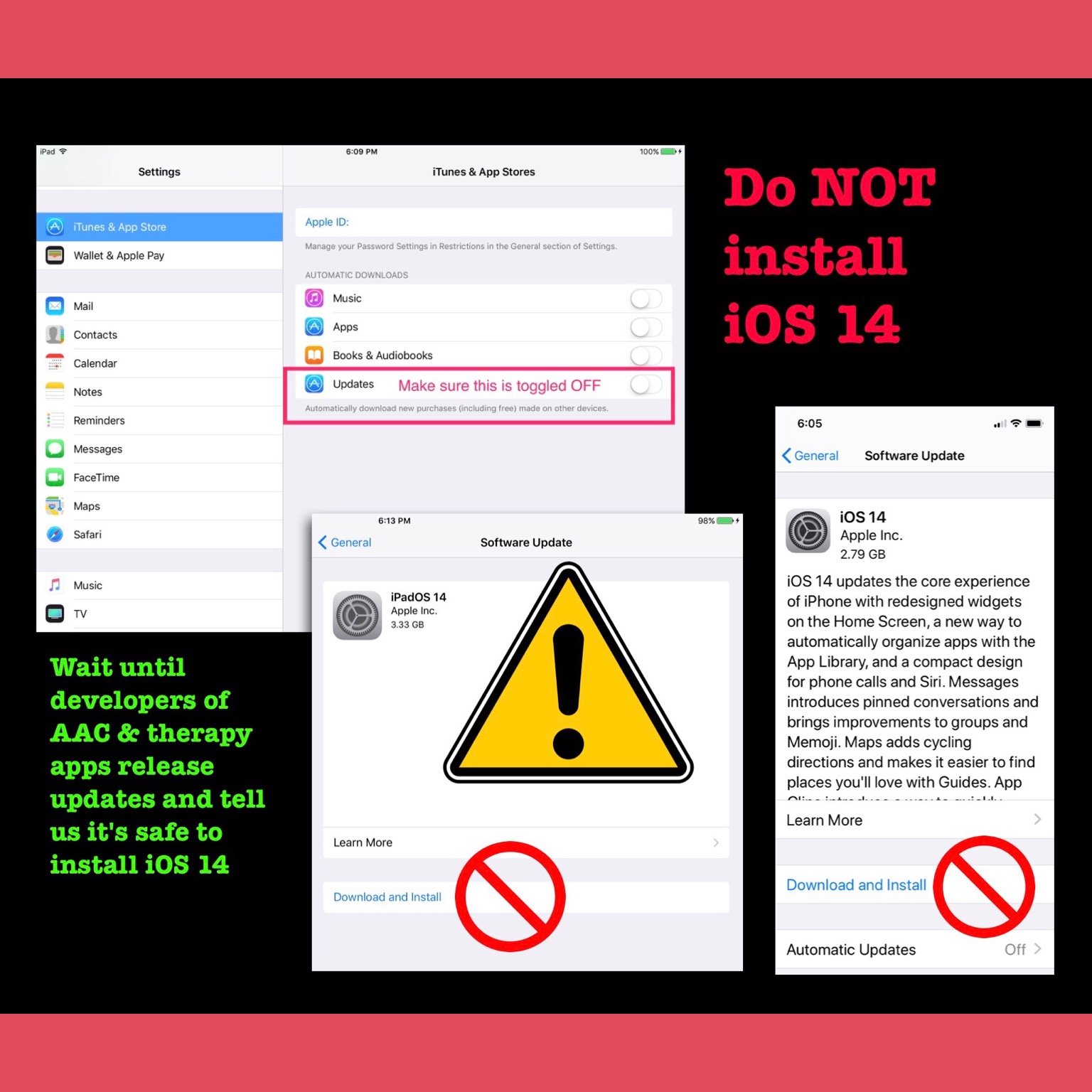
⚠️ Important Warning: iOS 14 was released today. It is NEVER a good idea to install a new iOS when it first comes out. 🛑 There are always glitches…. sometimes big ones that cause devices to “brick” or ones that cause glitches in apps where they either crash or don’t work as expected. The developers of AAC and therapy apps need time to release updates.
Please wait until the developers of those apps announce that it’s safe to download iOS 14. Depending on how complex an app is that may take a few weeks to a few months.
I always keep automatic installation of iOS updates and automatic installation of app updates both toggled OFF.
Make sure your devices are backing up to iCloud and for AAC apps to make sure you back up any programming before installing any updates to those apps or to the iOS.
Be sure to toggle off the setting that automatically offloads apps to free up space. There is a trend in app developers switching to a subscription model and removing older apps.
I know most of us have to rotate apps on/off our devices due to storage issues. Before deciding to delete an app, it’s wise to check to make sure it is still available in the App Store and to read through the descriptions on recent updates to make sure nothing significant has changed (like it switching to a subscription based app). If an app hasn’t been updated in quite awhile that’s a red flag that it may no longer work when a new iOS is rolled out and if you have several apps like that you may want to consider purposefully keeping a device running an older iOS in order not to lose apps. I’m very glad I did that several years ago and still have an iPad running iOS 10.3.3.
Also posted this on Facebook, Instagram & Twitter to spread the word. Please share with anyone you know using an iPad, iPhone or iPod Touch for AAC, therapy or learning.
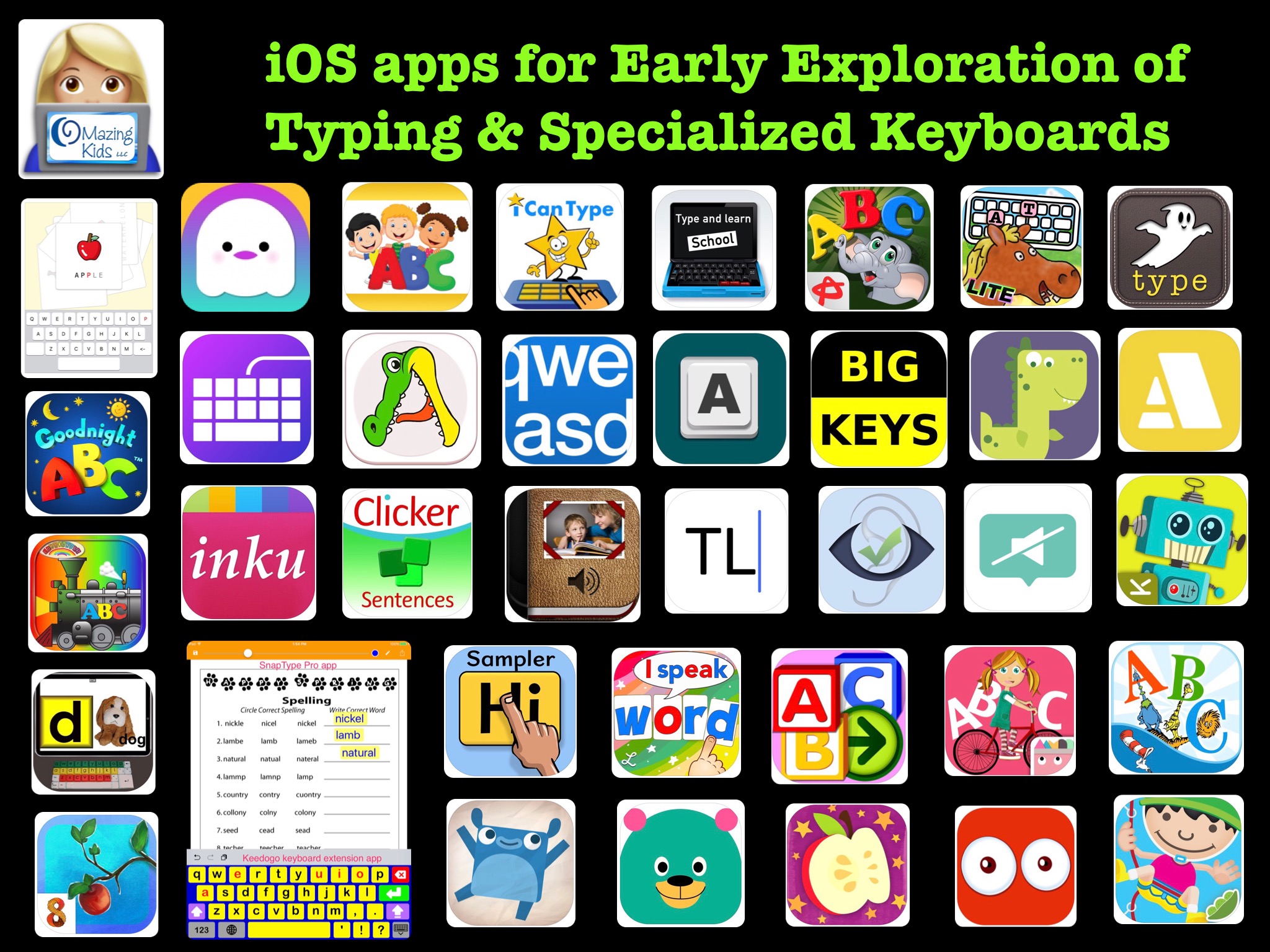
iOS apps for Early Exploration of Typing & Specialized Keyboards
Here is a list of over 50 iOS apps for early exploration of typing and specialized keyboards. For kids who are just beginning to show an interest and are easily frustrated it’s important to keep it as motivating and as fun as possible. An iPad full of well designed apps can be an amazing tool in your educational & therapeutic toolbox.
In this post I am sharing a mix of paid and free apps that I have used and found helpful.
Free: 23 apps
Affordable ($.99 – $4.99 – what you might pay for an item from the Target Dollar Spot, a latte from Starbucks, an item on Teachers Pay Teachers or a Boom Card deck): 22 apps
Mid-priced ($5.99 -$15.99 – what you might pay for a new toy, game or picture book): 7 apps
Expensive ($16.99 – $24.99 – what you might pay for therapy materials or bundles of items on TPT, both are specifically designed for individuals with special needs): 2 apps
Very expensive (over $24.99 – is specifically designed for individuals with special needs and has lots of customization features): 1 app
Of course every app that I share will not be a good fit for every child so it’s up to you to determine the ones to use with your child or patient.
I had several patients over my career whose interest in typing and AAC was initially sparked by their high interest in letters and the predictable order of the alphabet (similar to kids with a high interest in numbers, dates, etc…). Typing can also become an important part of writing and access to the curriculum.
You can save the PDF of this post in the iBooks app on your iPad and then tap on each link to go to that app in the App Store (it’s a 5-page PDF).
App prices & availability was verified in the USA App Store at the time of this post at 3:00pm CST on 5/17/20. Prices may vary in other countries based on the exchange rate. I only have access to the USA App Store so be sure to check prices before downloading in other countries.
General App Tips:
Some apps have IAPs (in-app purchases) to add extra features or have unsecured links so make sure the iPad is in “airplane mode” and toggle off the ability to download IAPs in the Settings area BEFORE opening the app. Even apps with “secured links” could be hacked by some kids so it’s always wise to go ahead do these two things before using apps with kids. I avoid apps with ads (some can be blocked via “airplane mode” but others cannot). It’s also wise to use Guided Access to prevent exiting the app you are using.
If you like a “lite” version of an app, it is always a good idea to see if there is a full paid version of the app to purchase vs. using an IAP to upgrade within a free lite app. I’ve had enough problems with IAPs and trying to restore IAPs to avoid them as much as possible. Also most schools & public agencies have purchasing regulations that make it difficult or impossible to purchase items via IAP but can purchase a full paid app. This is the same reason that I typically avoid apps that require a subscription.
If you are looking for Android apps, the quickest way to see if an app has an Android version is to copy the name of an app and then paste into the search area on the Google Play app store or Amazon app store. If the app is available it may not be free on those platforms and/or may contain ads so look closely at each app description. Also look at reviews to see how well apps function since Android versions of apps may not be updated as frequently as iOS apps.
Apps that use their own in-app keyboard (instead of the iOS iPad keyboard):
Baby Keyboard by Ruiyi Chen, https://apps.apple.com/us/app/baby-keyboard/id1448361670, FREE (Ignore the word “baby” in the app name. It’s a fun free app, has color cue for the correct key and several categories of typing cards to choose from in the settings.)
Lexi’s World by Pop Pop Pop LLC https://apps.apple.com/us/app/lexis-world/id1434971401, $2.99 (errorless typing with cues, can use upper or lowercase QWERTY keyboard, what you type is added to the screen then tap on animals to see what they want you to add)
Type Letters by Tin Whistle, LLC, https://apps.apple.com/us/app/type-letters/id1498328032, iOS 13.2 or later, FREE (no frills, just types big letters on white background, nice to use for a no distraction exploring typing background)
Audivision by ATeamer, https://apps.apple.com/us/app/audivision/id1141299943, iOS 8.0 or later, FREE (no frills, just types big letters on white background, can slide to adjust font size in the iPad Settings area for this app, nice to use for a no distraction exploring typing background)
Type and Learn HD-S by Jetmobile, https://apps.apple.com/us/app/type-and-learn-hd-s/id846561699, $.99 (uses iOS iPad keyboard but keyboard extension apps only work in the open ended typing area, has open ended typing with text to speech, option to toggle on red outline around keys as hint in the spelling activity)
Animal Typing – Lite by Corentin Faucher, https://apps.apple.com/us/app/animal-typing-lite/id925341131, FREE lite app. (Has options for external Bluetooth keyboards. I don’t have the full paid version so don’t know if it’s worth $14.99 or not.)
Adobe Acrobat Reader for PDF by Adobe Inc., https://apps.apple.com/us/app/adobe-acrobat-reader-for-pdf/id469337564, FREE with IAPs (these two Adobe apps can be used together to scan a worksheet to turn it into a PDF and then annotate it with typing text. I find SnapType a much easier to use but sharing this as another option.)
ClaroPDF – Image to PDF Reader by Claro Software Limited, https://apps.apple.com/us/app/claropdf-image-to-pdf-reader/id666770153, FREE with IAPs (can also be used to import a picture of a worksheet and then annotate it with typing text. I find SnapType a much easier to use but sharing this as another option.)
Keyboard Extension Apps: It may be helpful to consider using a keyboard extension app that would make the iOS iPad Keyboard easier to use with features that are kid and special needs friendly.
Keedogo by AssistiveWare, https://apps.apple.com/us/app/keedogo/id915829477, $.99 (My favorite keyboard extension app with lots of customization options. Good for beginning typists since it doesn’t have word prediction or auto correction. If you want additional features the look at
IssieBoard by Beit Issie Shapiro, https://apps.apple.com/us/app/issieboard/id1074352181, FREE (several customization options for color (background, keys & font), ability to color specific sections or rows of keys, define “special” keys, etc.)
SuperKeys Accessible Keyboard by Crick Software, https://apps.apple.com/us/app/superkeys-accessible-keyboard/id917216287, $12.99 (A very unique keyboard that enlarges quadrants and then you select a large key within it. Nice for those with vision or fine motor needs but can also be helpful for those overwhelmed by looking through the entire field of keys. The SuperKeys keyboard is built in as an option in all of the Clicker Communicator AAC apps.
Other unique keyboard extension apps (not necessarily for kids or beginning typists…. but sharing just so folks will be inspired to think outside the box and search the App Store. Apps are often updated with new features and new apps are released frequently:
Microsoft SwiftKey Keyboard by SwiftKey, https://apps.apple.com/us/app/swiftkey-keyboard/id911813648, FREE (for more advanced typists who want a full PC style keyboard with the ability to customize the color for sensory needs, customization options, ability to swipe to type, has a nice “real keyboard” feel, the description shows IAPs for additional keyboard styles but as far as I can tell everything is included now. I’m currently using the “Nickel Classic Dark” theme as a nice alternative to the iOS iPad keyboard.)
FYI… There are a few AAC apps that use the iOS iPad Keyboard and therefore would allow for a keyboard extension app to be used. Examples include: Speak for Yourself, Proloquo2Go, Mighty AAC, ChatAble, Proloquo4Text, Predictable, Voice4u TTS, QuickType, Flip Writer, HandySpeech and several other text-to-speech (TTS) AAC apps. Exploring alternative keyboards can be a game changer for making typing as a means of AAC accessible. You may also want to explore accessibility features in the iPad settings (https://support.apple.com/guide/ipad/get-started-with-accessibility-features-ipad9a2465f9/ipados), styluses, adapted styluses, keyguards, external Bluetooth keyboards, etc. Take a look at Lauren S. Enders’ well organized Pinterest boards for ideas: https://pin.it/TWn9w6P (styluses: https://pin.it/t4cy8XV; keyboards & keyboard cases: https://pin.it/NydPTE8). I highly encourage you to collaborate with an Occupational Therapist and/or Assistive Technology Specialist when exploring AT options for the iPad. Some of that equipment is pricey so you want to make good decisions that fit that individual child’s needs. You may want to try things out in order to make those decisions. How to find the AT Lending Library in your state: https://www.at3center.net/stateprogram. Many have iPads, specialized apps and AT equipment available for short term loan to try out before making purchasing recommendations.
Endless Alphabet by Originator Inc., https://apps.apple.com/us/app/endless-alphabet/id591626572, $8.99 (Not a “typing” app but a really fun way to introduce kids to letter sounds as you drag letters back in place to make words to match funny illustrated animations.)
Double the fun: If you have access to two iPads it is fun to have these apps on one iPad and then have the keyboard based apps (or AAC app with a keyboard) on a separate iPad. After the child types the letter they get to complete the activity for that letter on the other iPad as a reward/reinforcer for typing. And of course all of these apps are fun for early literacy play & exploration.
Want to suggest an iOS iPad app to be added to this list? The best way to reach me is via Facebook messaging over on my OMazing Kids page. I’m pretty picky so they need to be well designed apps and be transparent/honest about any IAPs or subscriptions. If it’s a free app, please send the link from the USA App Store so I can download and try it out. If it’s a paid app and you are the app developer, please send the link from the USA App Store so I can look at the info before you send a promo code. I want to make sure that one of my iPads is compatible in order to try it out. I only post about apps that I own and have tried out.
It took me quite a bit of time to compile this list so please “tag” OMazing Kids when sharing it on social media and do not copy/paste it onto other blogs or documents or upload it to servers. I have it available here on my blog and plan on keeping my blog up for the foreseeable future.
Thanks,
Angela Moorad, MS, CCC-SLP, Founder of OMazing Kids, LLC
It’s amazing to see how much the field of AAC has changed over the course of my 28 year career as a SLP. Long gone are the old days of it taking years to see any major changes or improvements in AAC options. We are living in an era of rapid advancement thanks largely to social media that provides the opportunity for AAC users, therapists, teachers & parents to provide direct input to app and technology developers regarding what features we need. Most good AAC apps are now updated several times a year. Here is my list of top 10 updates that occurred for AAC apps in 2017:
.
#1: Proloquo2Go – in March 2017 version 5.0 added an amazing Search feature & Progressive Language. If you haven’t checked out this AAC app in awhile, I invite you to take a look at it again. These new features are a game changer. It also now includes English, Spanish, French & Dutch languages.
#2: Speak For Yourself – in January 2017 version 2.6 made this a Universal iOS app that can be used on an iPhone, iPod Touch & iPad. It also includes room for up to 40 different users (a great feature for SLPs trialing AAC with several different patients). Other updates this year added options to share vocabulary via AirDrop, more buttons became editable, the sentence bar background color can be changed & a “Manual Whisper Mode” was added to allow users to create a whole sentence prior to speaking.
#3: LAMP Words for Life – in July 2017 version 1.6.0 added a bilingual Spanish/English pageset, Word Finder updated to show and take you through the path to a word and added the option to backup to DropBox.
#4: TouchChat with WordPower HD – several updates added new pageset options, Arabic language added through an in-app purchase, Canadian French vocabulary files available as free upgrade and vocabulary files can now be backed up to DropBox and can be shared via E-mail and iMessaging.
#5: GoTalk Now Plus – in March 2017 version 4.11.6 added PCS Thinline symbols as an option through in-app purchase. In September 2017 version 4.11.11 added the option for Hybrid Scene pages (visual scene + up to 4 buttons) & the option to share messages from the Express Bar to Facebook, e-mail and text messaging.
#6: Snap + Core First – this new app was just released in June 2017 and in December 2017 already had a major update to add a bilingual Spanish/English pageset option & Spanish voices. At the end of October 2017 they added access to voice output in the free version of this app for ASHA certified SLPs as part of your MyTobiiDynavox account.
#7: Avaz Pro – in May 2017 version 4.2.6 added the option of having up to 77 buttons per screen. In September 2017 version 4.3 added the option to share via AirDrop and the Search now takes you through the path to a word.
#10: Custom Boards Premium by Smarty Ears had a major overhaul. New templates and updated Smarty Symbols were added. A great affordable option for making printable choice boards and visual supports.
https://itunes.apple.com/us/app/custom-boards-premium/id463344117?mt=8
. See this updated post for info about how SLPs can get free access to several AAC apps, funding tips & links to AAC user Facebook groups: https://omazingkidsllc.com/2016/06/11/aac-tips-how-slps-can-get-free-access-to-aac-apps-aac-app-user-groups-funding-options-more/.
. 2017 was a years of ups & downs in the world of AAC apps. It was exciting to see so many great improvements in apps and a couple of new apps released but at the same time very sad to see a few AAC apps either disappear or no longer function properly after the release of iOS 11. I’ve received numerous messages on my OMazing Kids page from parents and therapists with very heartbreaking stories of AAC users losing their voice when iOS 11 came out. Several small AAC app developers had not updated those apps in almost 5 years. It’s one thing to lose a favorite game or therapy app but a whole different thing to lose an AAC app. It’s a cautionary tale to anyone who has thoughts of developing a new AAC app. Beyond the initial costs of developing the app, it is imperative that you also have a very well thought out long term plan and finances for supporting and keeping an AAC app updated.
.














 OMazing Kids AAC Consulting