Angela Moorad, MS, CCC-SLP. Over 36 years experience in AAC. OMazing Kids AAC and app consulting. Creator of several AAC Feature Matching resources (https://omazingkidsllc.com/omazing-kids-aac-resource-links/). Includes info about unique features to support Gestalt Language Processors
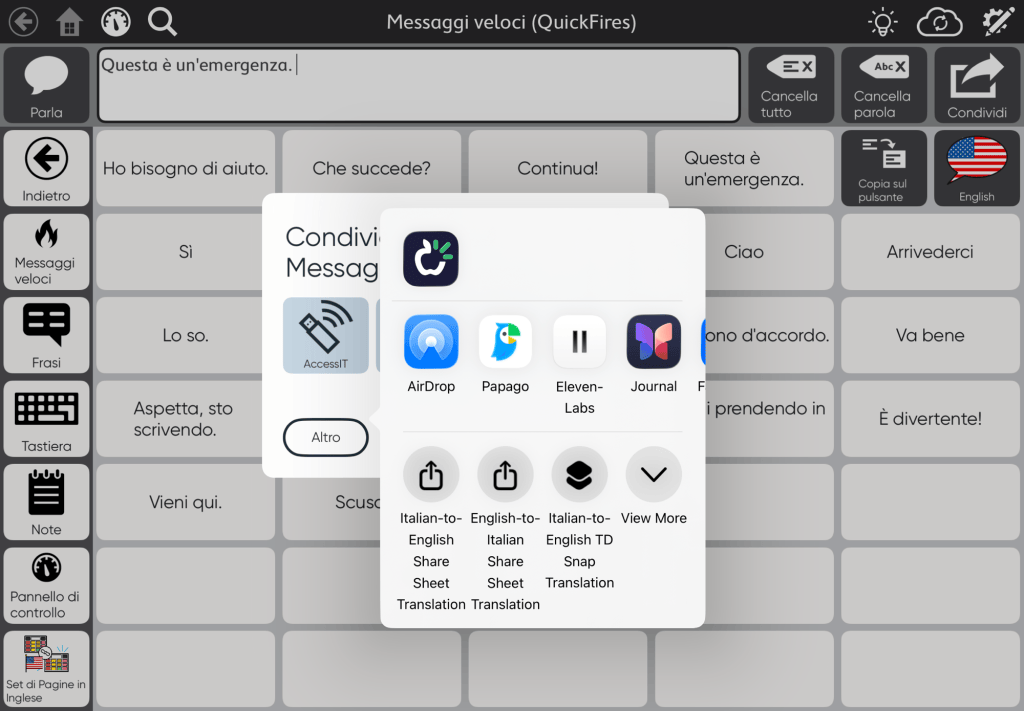
I spent quite a bit of time exploring this today to help answer a question over in the Tobii Dynavox® Community group on Facebook. Decided to share it here too in case anybody else is needing a way to translate the content of the Message Window in TD Snap into a second language.
Here’s information about how you can use Apple Shortcuts in two different ways in TD Snap to translate the content of the Message Window from Italian to English. But you could do this in several different supported languages. And the “Share Sheet” option worked in several other iOS AAC apps that offer a way to share the text from the Message Window. Not all. But several.
Watch the YouTubevideo outside of my blog to see the Description section where I shared links for all of the Shortcuts that I created and a free 2 page handout with screenshots of the commands needed in each Shortcut.
This Screen Recording was done on September 23, 2026 on my iPad Air 11” (M2) running iPadOS 26.5.2 and the most current version of TD Snap AAC Legacy (version 1.40.2.4885).
It is my personal iPad that is NOT on any type of MDM device management system.
I have no way to know if this will work on a managed / locked device or if it will work in the same way on iPadOS 27 and beyond or on future versions of TD Snap.
Also sharing here in this blog post to make it accessible to more folks:
Shortcut links (specifically for translating the content of the Message Window from Italian to English / English to Italian in TD Snap. Could be edited for any supported languages):
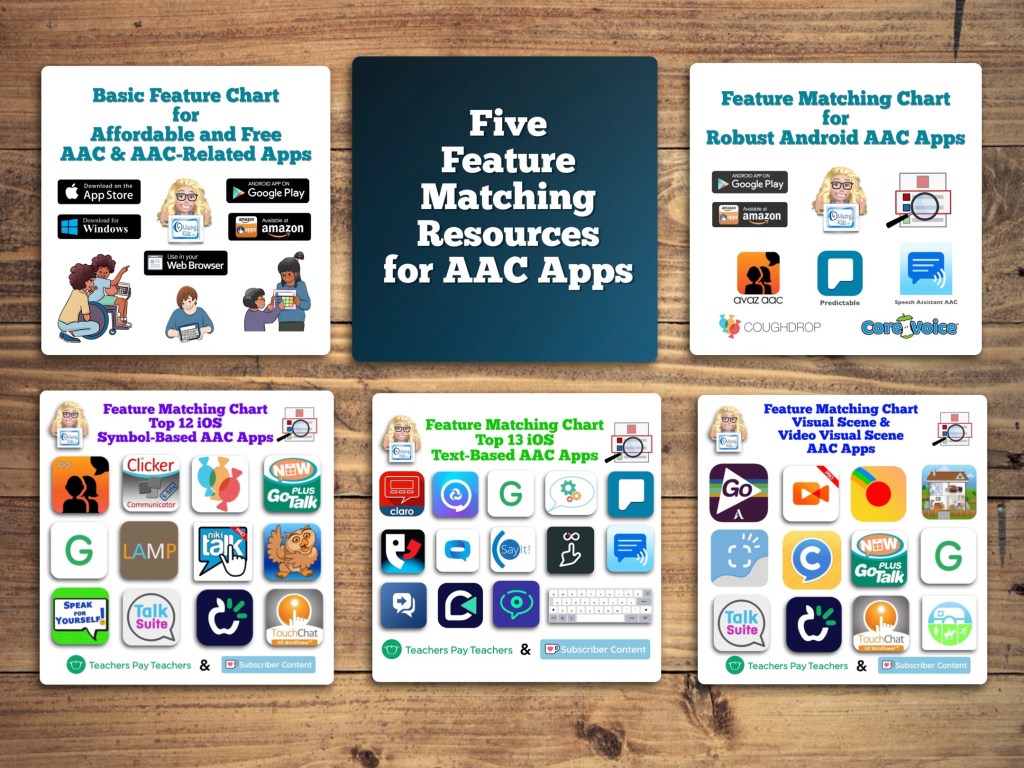
Looking for in-depth AAC feature matching resources? See this blog post: https://bit.ly/5aacFeatureMatchingResources. That post also includes videos comparing AAC apps on various devices on various platforms.
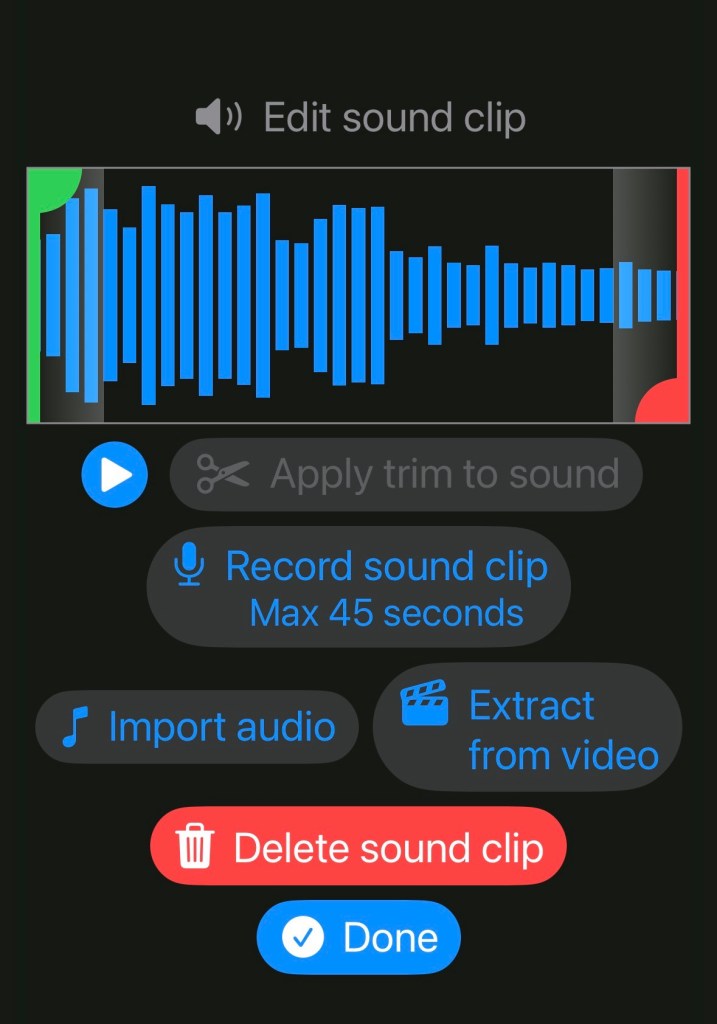
Looking for an AAC app that can extract audio from a video clip saved on the device directly within the AAC app?
TypingTalk AAC is a totally FREE app that can do that (plus also has the options to upload audio or record audio or use TTS voices)
Want to learn more about the features in this app? It was designed by an AAC user and was just added to my resource about iOS text-based AAC apps.
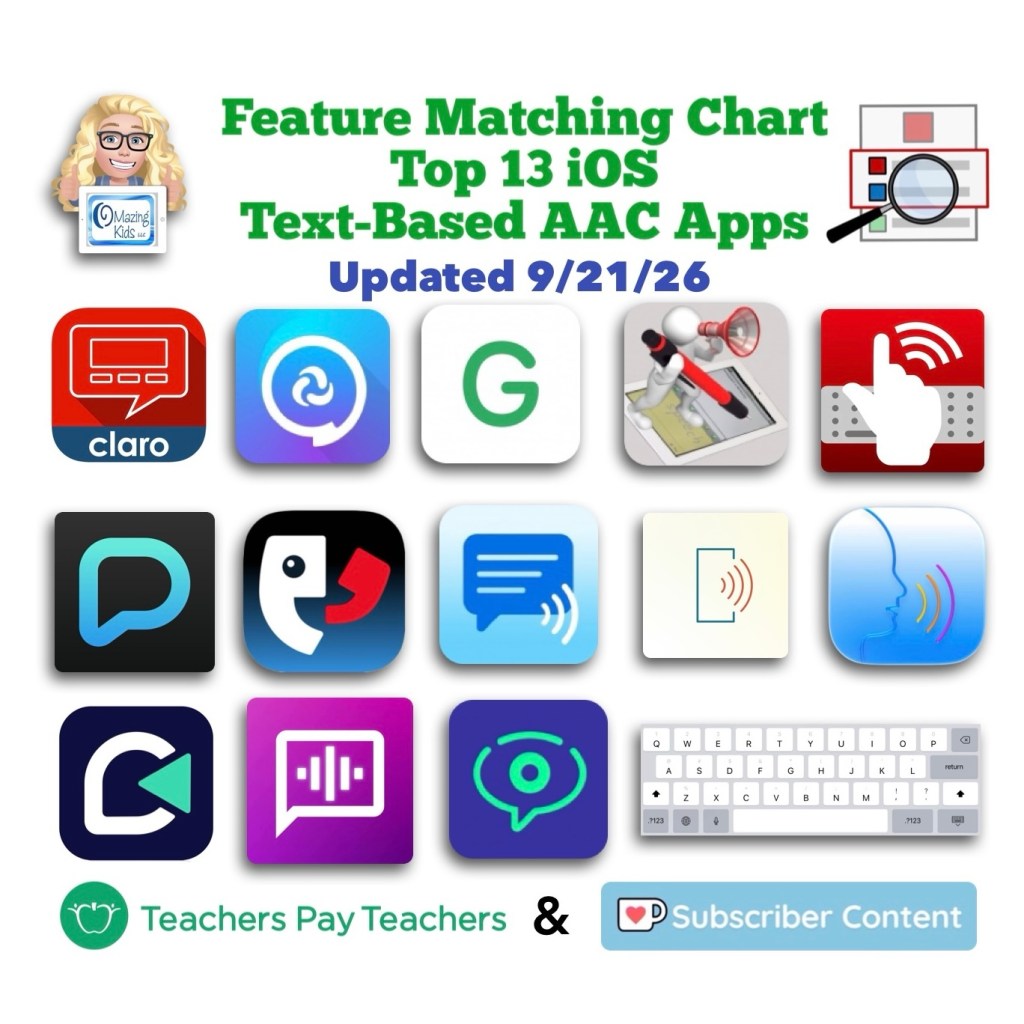
Resource Update: The Feature Matching Chart for the Top iOS Text Based AAC Apps has been updated on September 21, 2026 to remove Quick Type AAC and SpeakProse Unlimited, to add TypingTalk AAC, and to reflect new features in apps. Those who have previously purchased this resource on TPT can download the newest version for no additional cost: https://bit.ly/TextBasedAACapps. Ko-fi subscribers will be able to access a copy on the pinned resource post: https://ko-fi.com/Post/Links-to-posts-about-most-current-feature-matching-F1F5C9DMD
Looking for other in-depth AAC feature matching resources? See this blog post: https://bit.ly/5aacFeatureMatchingResources. That post also includes videos comparing AAC apps on various devices on various platforms.
Resource Update: The Feature Matching Chart for the Top iOS Text Based AAC Apps has been updated on September 21, 2026 to remove Quick Type AAC and SpeakProse Unlimited, to add TypingTalk AAC, and to reflect new features in apps.
Those who have previously purchased this resource on TPT can download the newest version for no additional cost: https://bit.ly/TextBasedAACapps.
Looking for other in-depth AAC feature matching resources? See this blog post: https://bit.ly/5aacFeatureMatchingResources. That post also includes videos comparing AAC apps on various devices on various platforms.
Looking for in-depth AAC feature matching resources? See this blog post: https://bit.ly/5aacFeatureMatchingResources. That post also includes videos comparing AAC apps on various devices on various platforms.
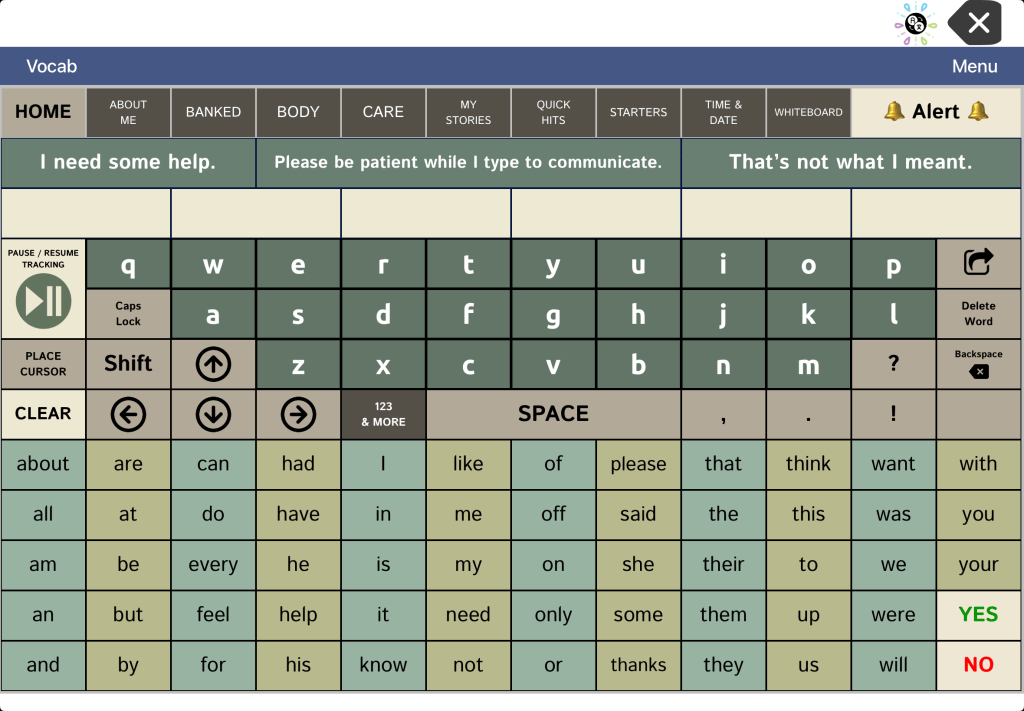
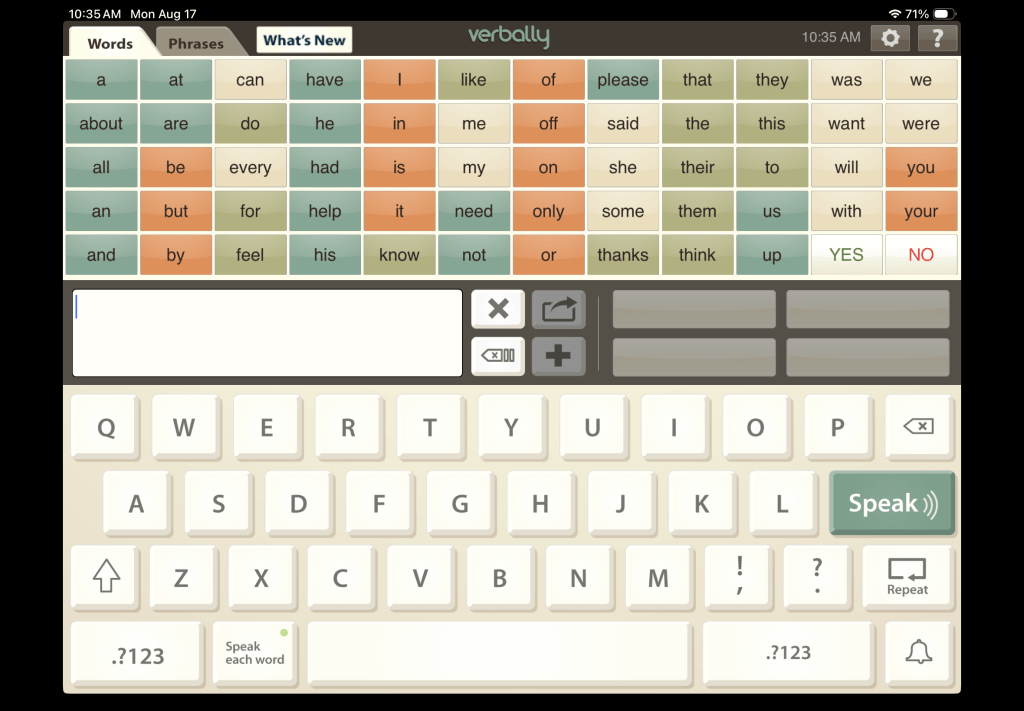
My “Verbally-inspired” customization of Dialogue AAC. I created this since I get frequent requests for information about AAC apps with a static word bank on the Home Screen like Verbally AAC used to have.
There are a couple of other text-based AAC apps that come with a static premade word bank on the Home Screen but the color scheme isn’t as customizable as what I was able to create in Dialogue AAC.
In-depth information about the features in this app and other text-based AAC can be found in my Feature Matching Chart for the Top 14 iOS Text-Based AAC Apps, https://bit.ly/TextBasedAACapps. I’m in the process of working on the next update for that resource so be watching for it soon. As a free bonus I’ll be including a link for this customized vocab file in that update.
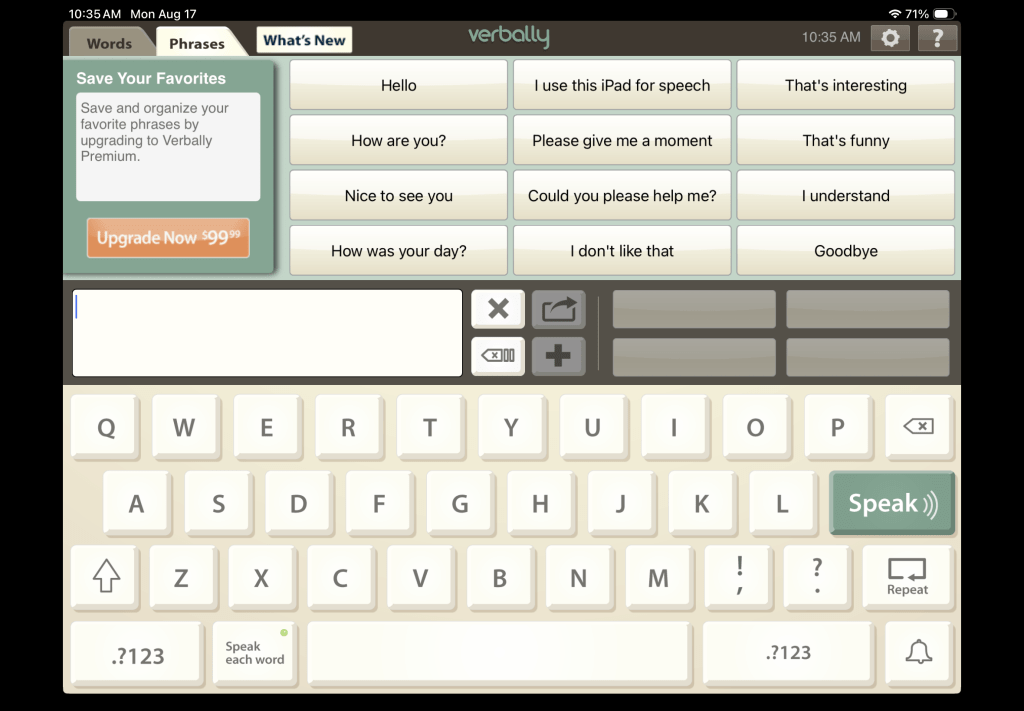
A screenshot of Verbally AAC showing the static word bank on the Home Screen A screenshot of the Phrases screen in the Verbally AAC app
Looking for other in-depth AAC feature matching resources? See this blog post: https://bit.ly/5aacFeatureMatchingResources. That post also includes videos comparing AAC apps on various devices on various platforms.
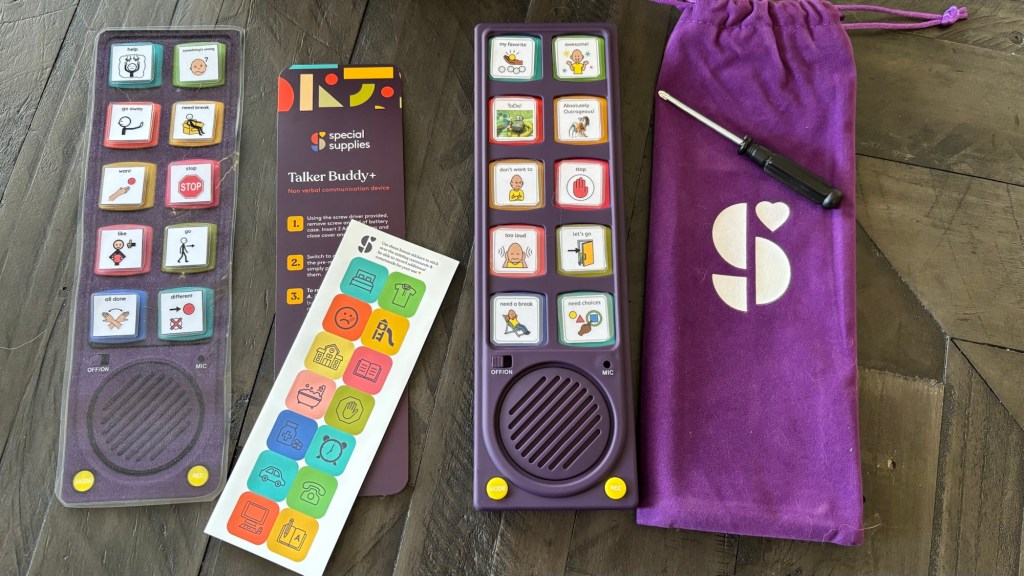
The Talker Buddy + by Special Supplies is an inexpensive mid-tech device that is available on Amazon for under $20. https://a.co/d/02GqWdvR (I am NOT affiliated with Amazon so I don’t earn anything from them. Links are shared for your convenience)
This *exact model* has ten 1” x 1” recessed buttons with a built in keyguard and all ten buttons are recordable.
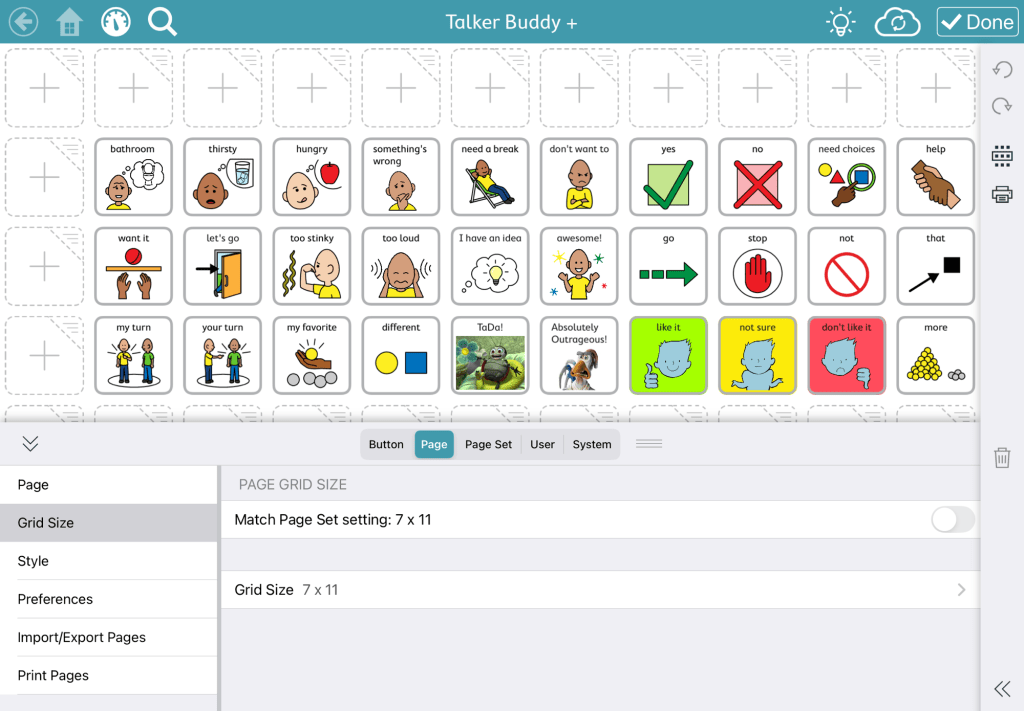
I created the symbols for this in TD Snap using a 7 x 11 grid, took a screenshot, cropped it, and pasted that into a Google Docs document. I printed it in black and white first, cut out a symbol to try it out, tweaked the sizing slightly so there would be room for lamination, then printed in color, cut out, laminated, cut out again leaving a small lamination border and rounded the sharp corners.
I attached the symbols to the device with clearlow profile Velcro (VELCRO Brand – 91302 Thin Clear Dots with Adhesive, 5/8″ Circles: https://a.co/d/0hHjSncs). See what that looks like in my video.
Note: This company also sells a basic version that has smaller round buttons that would be difficult to add symbols to and is NOT recordable. And a Pro version that has buttons that are smaller and NOT recessed.
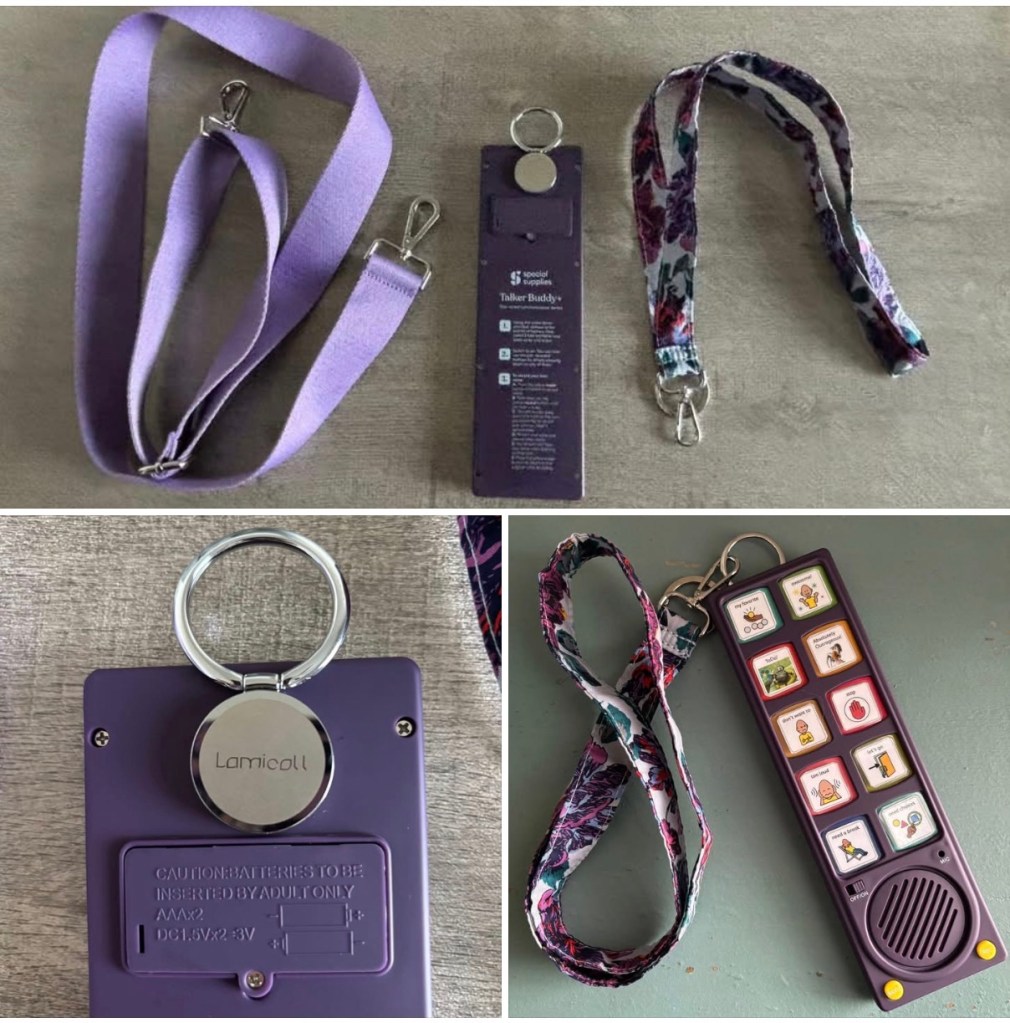
Lamicall Silver Cell Phone Ring (bought on Amazon, https://a.co/d/518Bgkn). I had seen a couple of folks comment about attaching these to iPad cases to add a strap and the reviews were good for the adhesive adhering strongly. I followed the instructions to clean the back of this device with an alcohol wipe – let it dry – put the ring on and held it firmly in place for several minutes. Then I let it sit for 24 hrs for the adhesive to fully set before attaching it to either strap.
I have two strap options: a wide crossbody strap and a wide lanyard.
ZOOEASS Purple Shoulder Crossbody Strap. Adjustable : max 62.5”, min 34.5” (including snap hooks), 1.5” wide. I bought on Amazon: https://a.co/d/iJ39hyp.
The wide lanyard is a Vera Bradley lanyard that I’ve had for several years.
I view this type of mid-tech device as a helpful tool in a larger AAC toolbox.
Looking for in-depth AAC feature matching resources? See this blog post: https://bit.ly/5aacFeatureMatchingResources. That post also includes videos comparing AAC apps on various devices on various platforms.
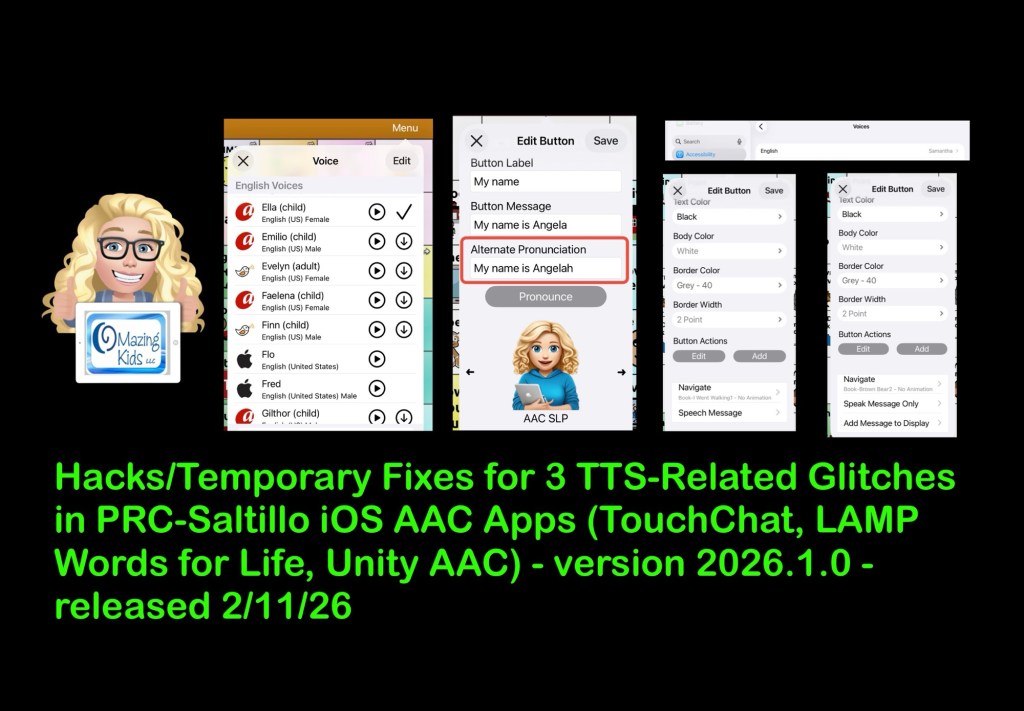
There are three distinct glitches related to text to speech (TTS) voices in the most recent 2026.1.0 app updates for the PRC-Saltillo AAC apps on 2/11/26. I know I’m not the only one experiencing these glitches based on numerous posts and comments on social media:
Dot glitch (Acapela TTS voices speak “dot” if you tap an empty Message Window
Alternate Pronunciation at button level glitch that causes the content of the Message Window to be spoken 3-4 times regardless of the type of TTS voice being used
iOS Accessibility TTS voice being used on random buttons instead of the voice set in the app
Here are three screen recording videos so you can see what’s occurring and the short term hacks / solutions that I’m recommending to folks until PRC-Saltillo gets these glitches fixed:
These glitches are also occurring in Dialogue AAC. I didn’t make a video for it since there isn’t a user group for that app on Facebook and I haven’t received any messages about it these issues in that app.
Hopefully my videos will be helpful in figuring what’s happening and help contribute to getting it fixed.
On 2/23/26 I emailed the company this information to the customer support email address listed for each app:
I received a reply from the LAMP WFL app support that same day and supplied the following details that they requested.
1. What Version of the LAMP app you are on. Select Vocab > Choose New Vocab > LAMP – Version #.##.# (bottom of the screen): LAMP version 2026.1.0 (real app, NOT an upgrade from LAMP WFL Discover)
2. What Version of iOS is running on your iPad. Go to Settings > General > About > Version ##.#.#: iPadOS 26.3
3. What model of iPad are you using: iOS settings->General->About->Model Number: iPad 10th gen (personal iPad, NOT on any type of MDM management system)
4. How much storage is available on the iOS device. iOS settings->General->iPad (or iPhone) Storage: 11.47GB of free storage
5. Which of the following Vocabulary sets are you using?LAMP WFL 1-Hit, LAMP WFL Transition, LAMP WFL Full, LAMP WFL 1-Hit Spanish/English (LAMP Version 1.6.0 and Higher), LAMP WFL Full Spanish/English (LAMP Version 1.6.0 and Higher), LAMP WFL 1-Hit VI, LAMP WFL Full VI, Blank Vocabulary that has be Customized from the ground up without using a copy of the Template as a base: LAMP WFL Full – USA English (not highly edited)
6. Is Vocabulary Builder ON or OFF? Select MENU – Select VOCAB BUILDER – The ON / OFF status is at the bottom of the window: Not using Vocabulary Builder
7. Are you using Guided Access: Not using Guided Access
8. What Access Method are you using? (Touch or Look device, Scanning): Direct touch access method. No Dwell Time, No Release Time.
9. When was the file created? File created today (2/23/26) but these same issues are occurring in other Vocab files.
10. When did you first notice this happen? Noticed immediately after the most recent app update on 2/11/26.
Note: As of 11:30am Central Time on Tuesday 2/24/26 I haven’t received a reply yet from the Customer Support for TouchChat or for Unity. If/when I do I will provide them the same detailed information and will update this blog post.
I’m no longer recommending any of the PRC-Saltillo AAC apps until the lagging and text-to-speech voice glitches are resolved.
It’s been over a month since the 2/11/26 app updates caused increased issues.
I never received a reply from TouchChat customer support or from Unity customer support.
I’m seeing posts and comments from parents, SLPs, and AAC users everyday asking how to fix the text to speech glitches. Additionally there is significant lagging in TouchChat in the most recent update.
This is unacceptable.
I’m baffled as to why we aren’t seeing the same level of concern and outcry like we did when they had an update that drastically changed the appearance of TouchChat that sparked a petition and the company acted pretty quickly to reverse that.
Looking for in-depth AAC feature matching resources? See this blog post: https://bit.ly/5aacFeatureMatchingResources. That post also includes videos comparing the best AAC apps on various devices on various platforms.
In addition to creating communication boards, flip books and true object based icons for non-tech AAC, I look at using whatever tech an individual has and finding a good affordable option to put on that so they have something to use immediately.
These can be helpful to use until an AAC eval can be completed, until a more robust option can be purchased, to meet a short term need or as a secondary tool to offer features that might not be available in their main AAC device, etc.
Or this may be what they use long term. Unfortunately not everyone has access to getting an AAC eval or options for funding more robust AAC so there are individuals who may rely on these affordable devices and apps as their only option.
It is also a reality that not everyone can afford an iPad so that’s why this blog post covers the three main app stores.
This is intended to give you a *general* idea of the overall cost of purchasing AAC for use on Amazon Fire vs. Android vs. iPadin 2025.
Total cost of a good model of tablet + good case with a rotating stand + a robust symbol-based AAC app:
• Amazon Fire: $310.00
• Android: $480.00
• iPad: $520.00
Prices would be $100 less if purchasing the app during a 50% off sale (typically in April and October). Additional savings if purchasing a tablet or iPad during a sale. These prices don’t include any extras like in-app purchases for premium symbols, premium voices, extra pagesets / vocab files, Apple Care, a screen protector or a extremely protective case, etc…
This is a cost comparison based on prices of devices and cases that I purchased and is just a general comparison. Avaz and WeaveChat are used in this comparison since they are the most robust symbol-based AAC apps available across all three platforms (Avaz on Amazon Fire would require side loading the Google Play Store). I am not including CoughDrop in the comparison this time. Unfortunately that app has become increasingly glitchy since it was acquired by Forbes AAC. Prices will vary based on the AAC app and whether or not you wait to purchase during sales.
Amazon Fire Tablet:
Amazon Fire HD 10 tablet, 10.1″, 64GB, with lock screen ads (2023 release, 13th generation): https://a.co/d/5yNpQ04, sale price today: $104.99 (regular price $179.99). I got a better deal during Amazon Prime Days in July 2024 when it was on sale for $84.99. I got a total of $42.00 in incentives (20% off my new tablet = $17 + $25 gift card). A couple of days later I paid $15 to remove the ads. So I only ended up paying $57.99 for this brand new tablet with double the memory, a much better processor and larger screen compared to the Amazon Fire HD 8 tablet, 8″ HD display, 32GB (2020 release) that I traded in.
Total if purchased 3/21/25 with no trade-in: $119.98 (would be less expensive during Amazon Prime Days Sale)
Robust symbol-based AAC app options:
• Avaz (Free app, 2 week free trial, then subscription ($9.99/mo or $99.99/yr look to see what new prices are) or a one time $299.99 purchase), side loaded from Google Play App Store
• Weave Chat AAC: totally FREE
• CoreVoice: $49.99
Total cost of tablet + case + robust symbol-based AAC app:
~ $158.97 – $308.98 (or as low as $113.97 – $163.98 if you get the tablet on sale and get Avaz or CoughDrop when they are 50% off – typically in April & in October).
Android Tablet:
Samsung Galaxy Tab S6 Lite 10.4″, 64GB: https://a.co/d/07JEMhI, $249.99 (the price has gone down since I purchased mine for $299)
Case with rotating stand (similar to the Pepkoo). I ended up purchasing one on eBay (https://www.ebay.com/itm/374088538546. Sadly that case is out of stock. I contacted the seller on eBay and they won’t be getting any more). It’s difficult to find cases with this type of rotating stand for the Samsung Galaxy Tab S6 Lite 10.4” Android tablet. I found this one but haven’t seen it in person: https://www.ebay.com/itm/114920453285, $28.99
Total: ~ $278.98
Updated 9/20/22: Looking for an affordable option for pocket-sized AAC? Many users prefer to just add an app to their iPhone or Android phone but some settings don’t allow phones (or it would be a battle to get an exception). The iPod Touch used to be my “go to” option for this. Since the iPod Touch was discontinued I purchased an Android Samsung Galaxy A03s (prepaid TracFone that has NOT been activated for cellular service) on Amazon. Shout out to Karen Erickson for sharing that idea in a comment in the AAC for the SLP group. It was only $59.88 and essentially gives me an Android equivalent to an iPod Touch (which Apple has discontinued) for pocket-sized AAC. I added a $12.99 case that has a tiny ring stand and sliding cover for the camera. So for $72.87 (+ the cost of the app) I have a very affordable pocket-sized AAC device:https://omazingkidsllc.com/2022/09/20/affordable-pocket-sized-android-aac/
Robust symbol-based AAC app options:
• Avaz (Free app, 2 week free trial, then subscription ($9.99/mo or $99.99/yr) or a one time $199.99 purchase)
• CoughDrop (Free app, 2 month free trial, then subscription ($6/mo) or one-time purchase ($200). More info about their other subscription options: https://bit.ly/3h8aEC1)
• CoreVoice: $49.99
Total cost of tablet + case + robust symbol-based AAC app:
~ $328.97 – $478.98 (or $378.98 if you get Avaz or CoughDrop when they are 50% off – typically in April & in October)
If you also need a shoulder carrying strap look at the Pepkoo Triple Shockproof Case: https://a.co/d/0RyWDMz, $26.99
Total: ~ $319.99 – $325.99
Robust symbol-based AAC app options:
• Avaz: Free app, 2 week free trial, then $9.99/mo or $99.99/yr subscription or $199.99 one time purchase
• Clicker Communicator: $199.99
• CoreVoice: $49.99
• CoughDrop: Free app, 2 month free trial, then $6/mo subscription or $200 one time purchase. More info about their other subscription options: https://bit.ly/3h8aEC1
• GoTalk Now / GoTalk Now Plus: $99.99 / $169.99
• Grid for iPad: free version with 30 day free trial, then $10.99/mo subscription or $399.99 one time purchase
• LAMP Words for Life: $299.99
• Niki Talk 2 Pro: $89.99
• Proloquo + Proloquo Coach: free app, 30 day free trial, then $9.99/mo or $99.99/yr subscription
• Proloquo2Go: $249.99
• Speak for Yourself: free version with 30 day free trial, then $299.99 one time purchase
• Talk Suite Pro: $199.99
• TD Snap: free version with 60 day free trial, then $49.99 one time purchase
• TouchChat with WordPower: free version with 30 day free trial, then $299.99 one time purchase
Total cost of iPad + case + robust symbol-based AAC app:
~ $369.98 – $725.98 (varies depending on the app, some of these apps are ~50% off twice a year. As a comparison to the Amazon & Android versions, the total if you got Avaz or CoughDrop for 50% off = ~ $419.99
Apple launched the iPad 10th gen today (10/18/22). Unfortunately they changed the size. It’s 10.9” instead of 10.2”.
Which means the cases that we have been using/recommending for the 7th gen/8th gen/9th gen iPads won’t fit the 10th gen.
It might be awhile before case manufacturers get good cases for the 10th gen on the market. Especially cases with the features that we want for AAC users.
Apple also raised the price by $120.
10th gen, 64GB: $449
9th gen, 64G: $329
Amazon currently has the 9th gen, 64GB iPad on sale for $269: Limited-time deal: 2021 Apple 10.2-inch iPad (Wi-Fi, 64GB) – Silver https://a.co/7YHiqTO
<< sigh >> 😢
I had hoped that Apple would continue to leave that base model iPad at the same size and price since we had been having a good multi-year run of Apple leaving the base model iPad specs alone. So on the verge of a recession they decided that it’s time for a $120 price jump and put stress on case manufacturers with the size change. This is why we have lost so many great case options over the years (GripCase, LifeProof Nüüd, etc..). Apple claims to care about accessibility but then is this clueless 🙄😢
If you know someone who was thinking about getting an iPad for AAC, I’d let them know so they can get a good price on the 9th gen before those are no longer available
Windows: The cost would vary greatly depending on the type of tablet or laptop purchased. The Windows tablet that I purchased would not be durable enough for primary use for AAC.
This post is not implying that price should be the sole factor when choosing AAC but it is acknowledging that in real life many folks have to purchase this on their own and price is a factor.
Tips: If you are using an Android tablet & an Amazon Fire Tablet with the Google Play App Store side loaded, be sure to toggle on Family Sharing before making app purchases & make the purchases from the Google Play App Store on your Amazon Fire Tablet. Those have been recognized by Google Play on my Android tablet. The reverse was hit and miss (likely due to the side loading).
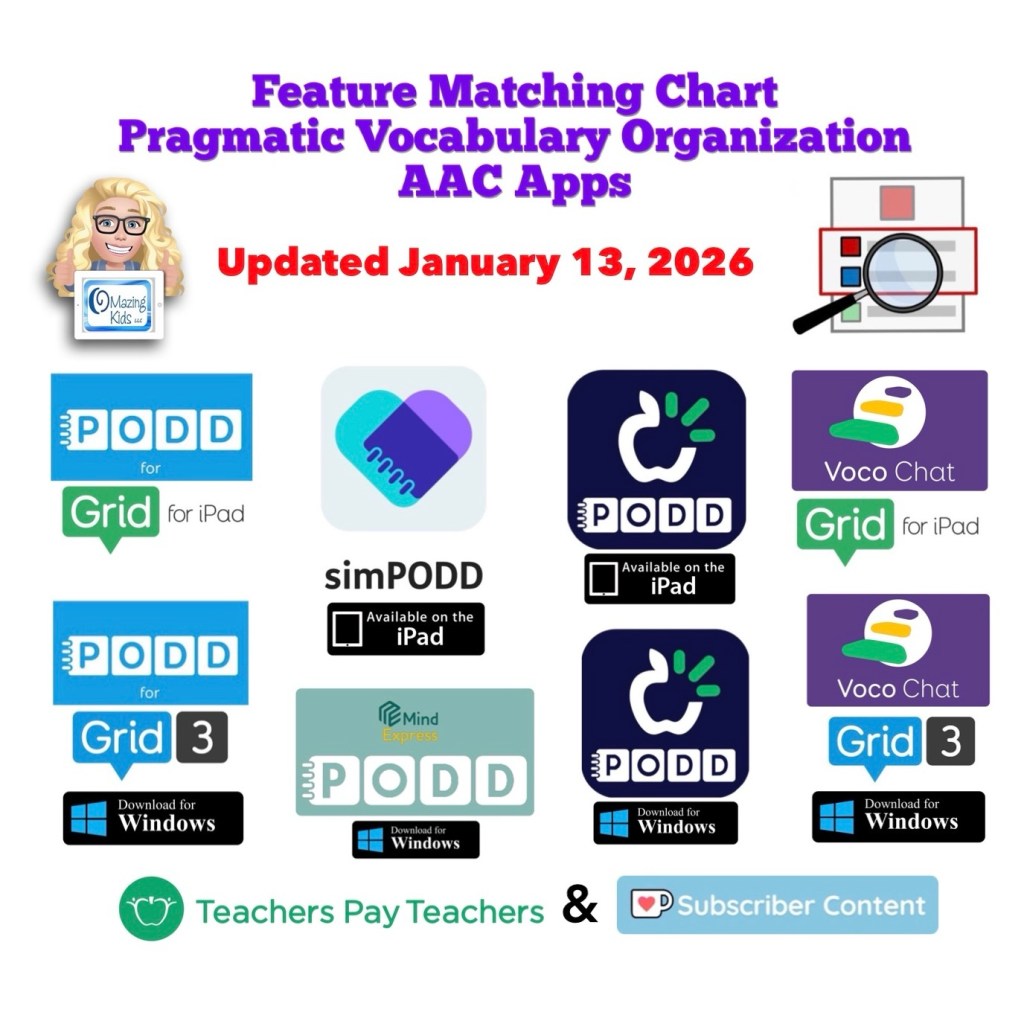
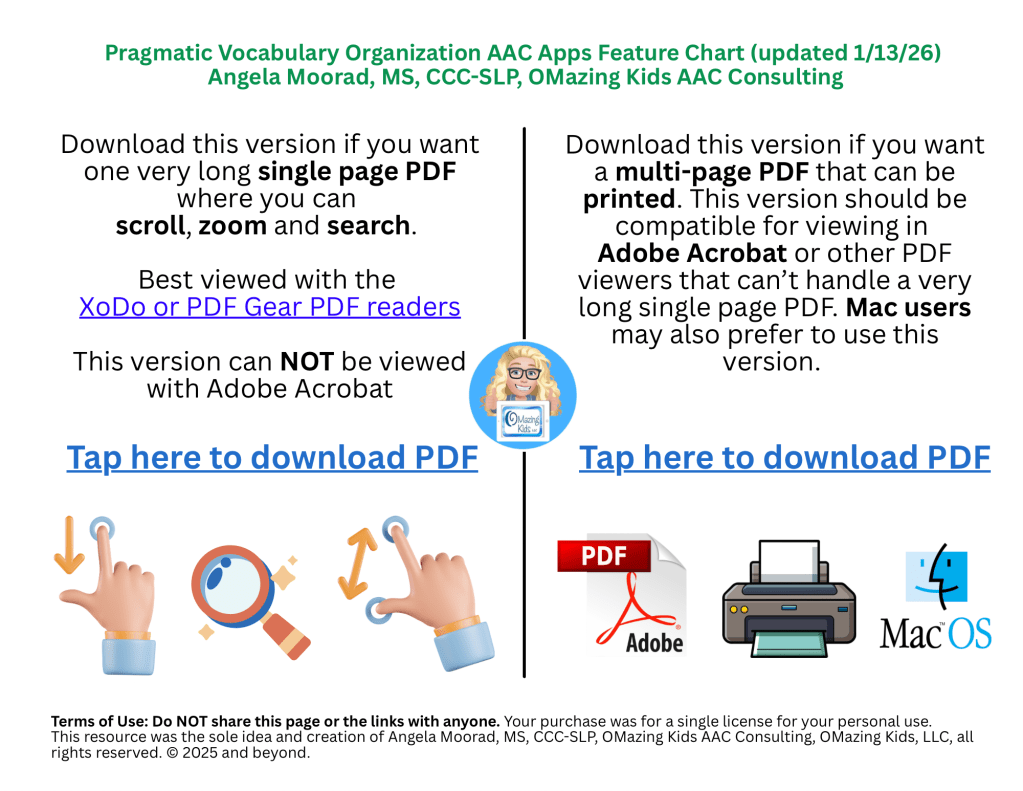
Added a new Landing Page to help folks choose which version of this resource you need (a single long page PDF where you can scroll, zoom and search OR a multipage PDF for those who want to print, view it in Adobe Acrobat or on a Mac computer)
Note: CoughDrop is being removed from all of my feature matching resources. See this blog post: https://bit.ly/AACappReliability-AppDeveloperTrustworthiness. The open source Sequoia 15 board set can be imported and used in AsTeRICS Grid but that will have different interface features than CoughDrop did.
Looking for other in-depth AAC feature matching resources? See this blog post: https://bit.ly/5aacFeatureMatchingResources. That post also includes videos comparing the best AAC apps on various devices on various platforms.
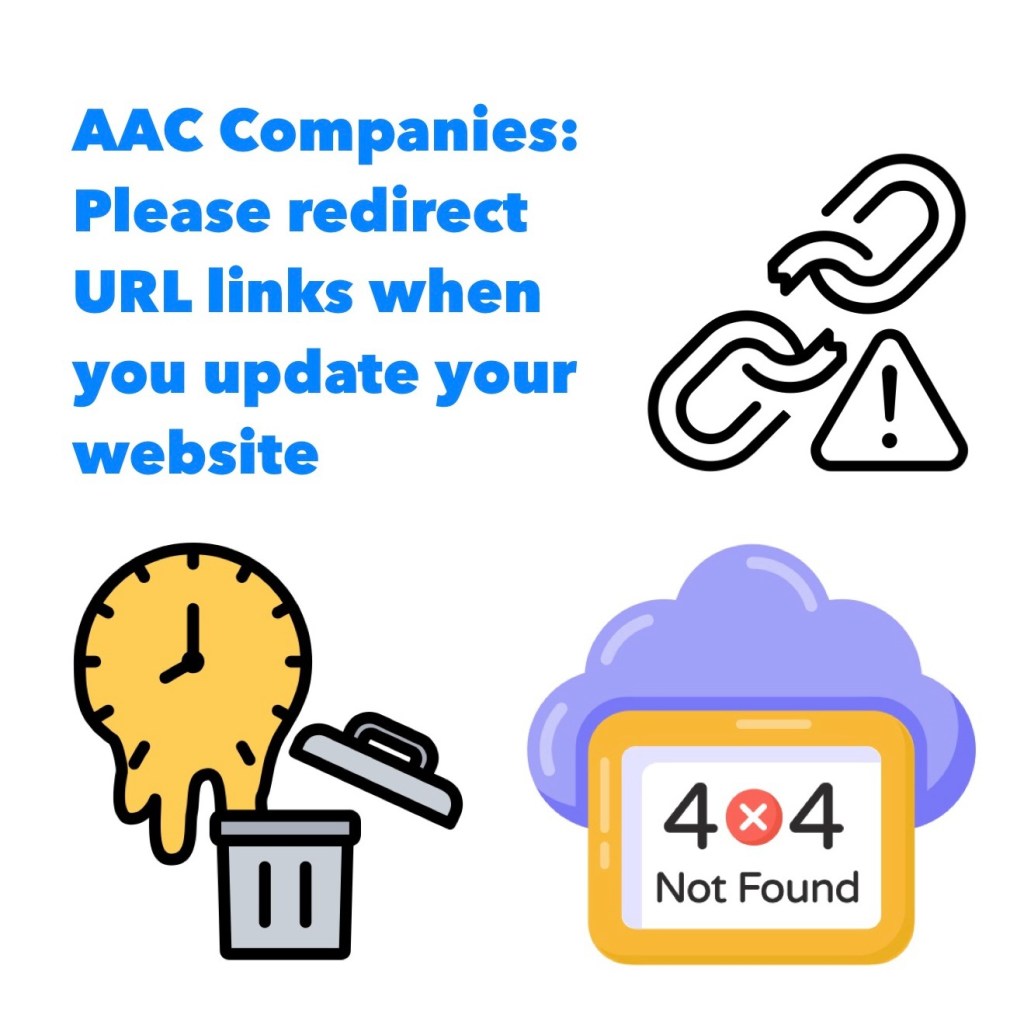
If you care about your customers please redirect URL links when you update your website. It’s very time consuming and frustrating trying to track down things that I have bookmarked and run into broken links and the dreaded 404 error.
I search extensively on updated websites and e-mail/message requesting help but good grief it’s frustrating.
Thank you.
Looking for in-depth AAC feature matching resources? See this blog post: https://bit.ly/5aacFeatureMatchingResources. That post also includes videos comparing the best AAC apps on various devices on various platforms.