Angela Moorad, MS, CCC-SLP. Over 36 years experience in AAC. OMazing Kids AAC and app consulting. Creator of several AAC Feature Matching resources (https://omazingkidsllc.com/omazing-kids-aac-resource-links/). Includes info about unique features to support Gestalt Language Processors
How well does the App Developer communicate to let users know about known problems and what they are doing to resolve them?
How quickly are the issues resolved?
No app or software is immune from bugs regardless the size of the company or how long they have been around. The important part is how the app developer handles these issues, transparent communication, and how severely users are impacted.
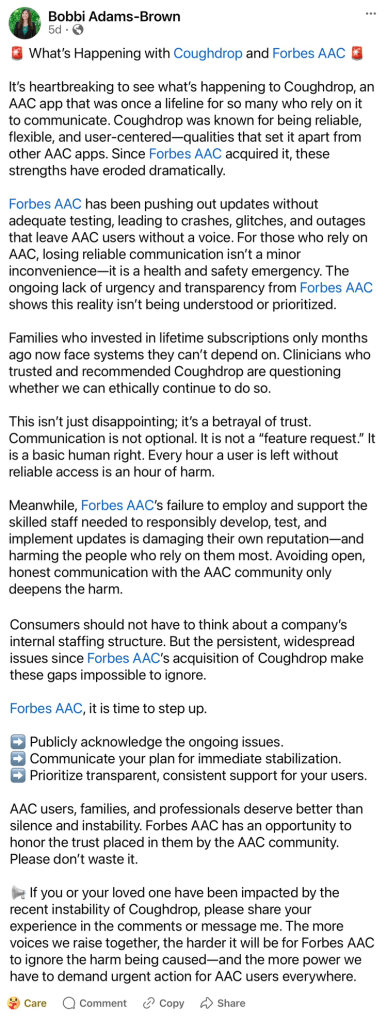
I have previously announced that I will be removing CoughDrop from my AAC feature matching resources due to increasing glitchiness over the years since Forbes AAC acquired the app in early 2023.
Unfortunately Forbes AAC has not been trustworthy or reliable and have made several promises to fix the app but then failed to deliver what was promised.
A recent update for the iOS version made things WORSE (not better). The second recent update for the iOS version improved a few things but not everything. I emailed the new CoughDrop Product Manager a screen recording video of ongoing issues related to the Premium Voices and iOS System Voices and differences between what’s available when using the app on my iPad vs. my iPhone.
I haven’t been able to install a Premium Voice in this app on my new Android tablet since part of the menu is cut off on the screen.
Forbes / CoughDrop has done a poor job of responding to user questions in their CoughDrop Users Group on Facebook. Hopefully this will improve with the new CoughDrop Product Manager joining the group. They need to provide ongoing engagement and support in this group to rebuild trust.
I truly hope the most recent promise by Forbes AAC will be fulfilled and CoughDrop can become a reliable AAC app again.
It will take a at least a year of Forbes maintaining and improving CoughDrop to earn trust as an app developer. For the sake of their users I hope this happens.
It’s an honor to have my OMazing Kids AAC Consulting blog and resource links page selected as the knAAC Awards “AAC Community Site of the Year” again in 2025: https://www.openaac.org/knaac-awards/2025/
Looking for in-depth AAC feature matching resources? See this blog post: https://bit.ly/5aacFeatureMatchingResources. That post also includes videos comparing the best AAC apps on various devices on various platforms.
* Updated with info about new features in apps, updated pricing info and updated lists of free apps.
Those who have previously purchased it on TPT can download the most current version for no additional cost: https://bit.ly/AAC-At-a-Glance.
Looking for in-depth AAC feature matching resources? See this blog post: https://bit.ly/5aacFeatureMatchingResources. That post also includes videos comparing the best AAC apps on various devices on various platforms.
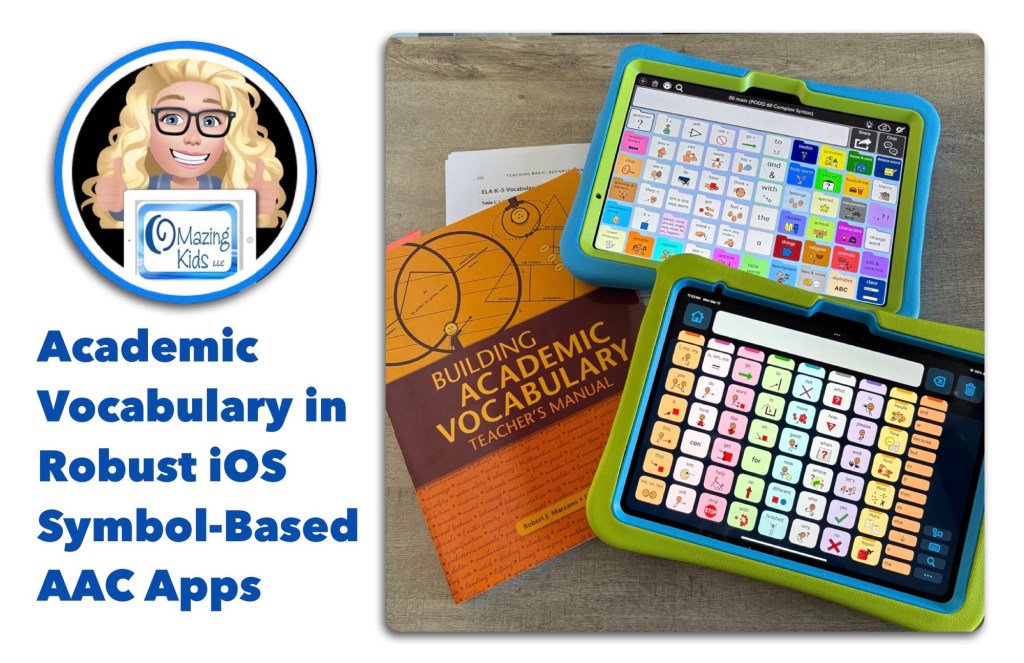
I recently took a deep dive into looking at inclusion of premade Kindergarten math, language arts, science, and social studies academic vocabulary in USA English in 23 vocabulary options in robust iOS symbol-based AAC apps.
✅ Here’s a ranking summary of how the vocabulary fared with inclusion of 147 specific wordson 3/15/25:
🥇 Proloquo (the newer app, different from Proloquo2Go): 147/147 = 100% (20 of the words are only available as a Related Word. So for those who are unable to use buttons that small or buttons without symbol support the score would drop to 127/147 but that’s still 1st place in this comparison)
🥈 PODD 60 Complex Syntax (same in all apps that offer PODD): 126/147 = 86%
🥉 Quick Core 112 in CoughDrop: 120/147 = 82%
SuperCore 50 Teen/Adult in Grid for iPad: 117/147 = 80%
Avaz 117 grid & Motor Plan 66in TD Snap (MP30 & MP40 have the same vocabulary as MP66): 116/147 = 79%
Speak for Yourself: 115/147 = 78%
Avaz 60 grid: 114/147 = 78%
SuperCore 50 Child in Grid for iPad: 108/147 = 73%
Full Vocabulary in LAMP Words for Life: 106/147 = 72%
Weave Chat AAC 7×15: 105/147 = 71%
9×16 Crescendo Advanced Core in Proloquo2Go: 104/147 = 71%
7×11 Crescendo Intermediate Core in Proloquo2Go: 102/147 = 69%
WordPower60 Basic & WordPower108 in TouchChat with WordPower: 100/147 = 68%
Talk Suite Pro 7×10: 99/147 = 67%
Flexspeak: 96/147 = 65%
Core First 8×10 in TD Snap: 94/147 = 64%
Quick Core 60 in CoughDrop: 85/147 = 58%
Gateway Developing Language & Gateway Advanced Communicator both 9×12 (really 9×11) in Proloquo2Go: 83/147 = 56%
Gateway Child Language and Literacy 9×11 grid in TD Snap: 80/147 = 54%
Note: The rankings in this comparison will change over timeas AAC app developers add new vocabulary to their app(s). Gateway in TouchChat with WordPower wasn’t included in the comparison since it doesn’t have a Search unless you edit to add it. Gateway in Mind Express 5 and WordPower in Grid 3 weren’t included in the comparison since those are only available on Windows.
❓How I decided on a list of 147 specific academic words:
I do NOT trust Artificial Intelligence (AI) to create accurate information and therefore did not use it when working on this comparison.
❓Where you can find a copy of the specific vocabulary list, data, and notes from my comparison:
This information is included in the most recent update for my Feature Matching Chart for the Top 13+ Robust iOS Symbol-Based AAC Apps on 3/15/25. Available on TPT: https://bit.ly/SymbolBasedAACapps. Those who have previously purchased this resource on TPT can download the newest version for no additional cost.
I will be emailing a copy to each of the AAC app developers included in this comparison.
❓How I determined if an app included these words:
This was based on a fresh install of the most current version of each app out of the box (official from that company, no editing done) on 3/15/25. Only included robust iOS symbol-based apps with a Search available. I personally checked all 147 words in all 23 vocabulary files in these apps.
❓Why my comparison is only for Kindergarten vocabulary:
I needed a manageable task to actually get it done. I don’t have access to an automated way to do this. It took me hours to search each word in all of these vocabulary options.
I have used Proloquo (the newer app, different from Proloquo2Go) enough to know the gap between the depth of academic vocabulary it offers vs. other AAC apps will widen even more as you look at academic vocabulary beyond Kindergarten. Proloquo offers academic vocabulary on up to an adult level.
❓Why my comparison is only for USA English vocabulary:
I am not a native or fluent speaker of any other language. Hopefully folks who speak other languages will do a similar comparison.
❓Why my comparison only includes symbol-based AAC:
Most Kindergarten students who use AAC tend to use symbol-based AAC. Of course some might be able to type or use text-based AAC… I’ve had kids as young as 3 1/2 years old who could…. but this isn’t typically the case.
⭐️ Conclusions:
The Proloquo app (newer app, different from Proloquo2Go) has excellent academic vocabulary but the half-sized Related Words buttons may pose accessibility issues for some individuals due to the small size and lack of symbol support. Hopefully AssistiveWare will eventually add this same depth of academic vocabulary to their Proloquo2Go app.
We need more AAC apps to come pre-programmed with robust academic vocabulary across grade levels that can be used by AAC users with a wide range of access needs.
Relying too heavily or solely on “descriptive teaching / descriptive language” will not allow individuals access to enough vocabulary to be successful in academic settings. This is feedback that I’m hearing directly from AAC users and those supporting them. Having more academic vocabulary pre-programmed will reduce the burden currently put on parents and/or AAC users to add this. I’ve personally experienced folks taking “descriptive language” to an extreme when I questioned why particular commonly used words weren’t in an AAC apps. In one instance I was told to use “round + sandwich” when the word “hamburger” wasn’t in an app. That happened to be one of that child’s favorite foods so of course I added that word.
✅ ❌ Important Notes:
Of course we can’t expect an AAC app to have EVERY word in the English language. Even Proloquo doesn’t have EVERY word and I see occasional posts from folks asking for advice on where to add a particular word or related word. Every AAC app is going to need to be personalized. That’s different from the academic vocabulary being discussed here.
I am NOT implying these are the only academic words a Kindergarten student might need. That might vary depending from state to state and from school district to school district.
I am NOT implying that AAC use should become “work” or used primarily for “academic” activities.
I am NOT implying that these 147 words are only “academic”. Words are words. They might be used to share information about highly preferred topics and used across environments (not just at school).
This is just a comparison of one aspect out of hundreds of features in robust AAC apps. It should not be the only thing considered when considering AAC options. It’s important to do comprehensive feature matching and a consideration of all of the things that individual might need in a robust AAC system (which often needs to include more than one tool). See my roundup post of in-depth Feature Matching Resources for AAC Apps (comparing features in AAC apps) + several videos comparing AAC apps across platforms (iPad, Android, Amazon Fire, Windows):https://bit.ly/5aacFeatureMatchingResources
I’m NOT saying that Descriptive Teaching / Descriptive Language isn’t a helpful strategy. But I am listening to AAC users and parents supporting them when they express frustration in how that is often used as an excuse to not provide enough academic vocabulary in AAC apps for them/their child to have access to enough vocabulary to be successful in academic settings.
Two things can be true at the same time. It will be helpful to have more academic vocabulary included in symbol-based AAC apps AND “descriptive teaching / descriptive language” strategies can be helpful when a particular word isn’t available in that particular AAC app yet.
🎯 The purpose of this comparison is to raise awareness of robust academic vocabulary needing to be included as part of an AAC system/toolkit. See this blog post for more info: https://bit.ly/DearAAC-appDevelopers.
Looking for in-depth AAC feature matching resources? See this blog post: https://bit.ly/5aacFeatureMatchingResources. That post also includes videos comparing AAC apps on various devices on various platforms.
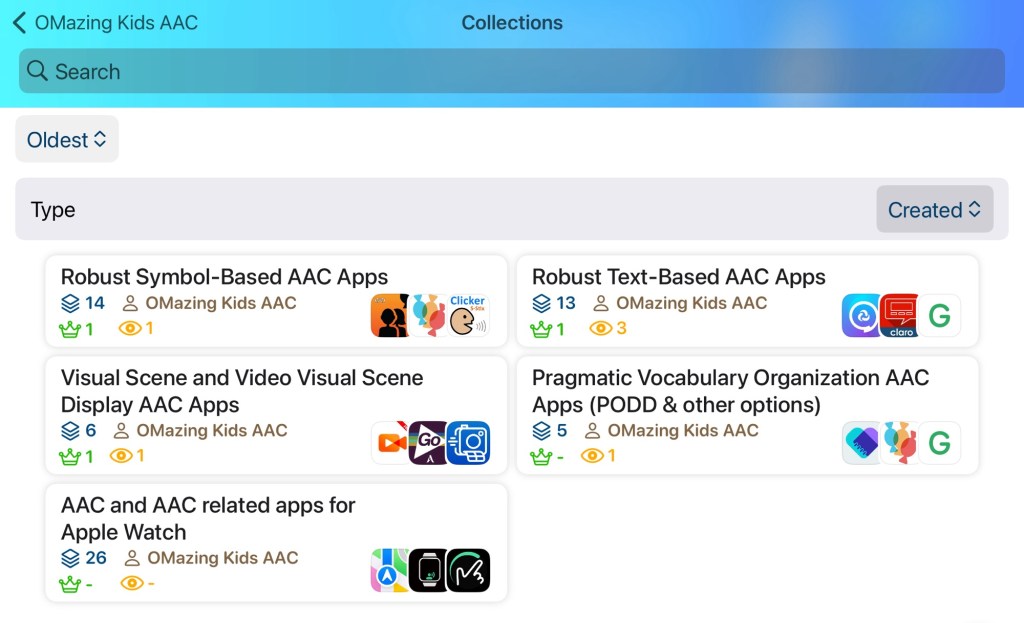
I was sad to see the AppSliced website close down but then relieved to find the same type of info available on AppRaven. It’s a free app and the basic features are free. It’s a good way to see pricing history on apps and a bit of other info. I also like the option to create collections.
I’ll update this post as I create other collections.
Looking in-depth AAC feature matching resources? See this blog post: https://bit.ly/5aacFeatureMatchingResources. That post also includes videos comparing the best AAC apps on various devices on various platforms.
Updated Resource 8/5/24: AAC Apps and Features At-a-Glance (Single Page Handouts):https://bit.ly/AAC-At-a-Glance. This 90 page PDF resource has been updated to add Weave Chat AAC, to reflect new features in apps and to update info about pricing. See the new Table of Contents: https://bit.ly/-TOC-AACAppsandFeaturesAt-a-Glance. Those who have previously purchased it on TPT can download the most current version for no additional cost: https://bit.ly/AAC-At-a-Glance.
Looking for other in-depth AAC feature matching resources? See this blog post: https://bit.ly/5aacFeatureMatchingResources. That post also includes videos comparing the best AAC apps on various devices on various platforms.
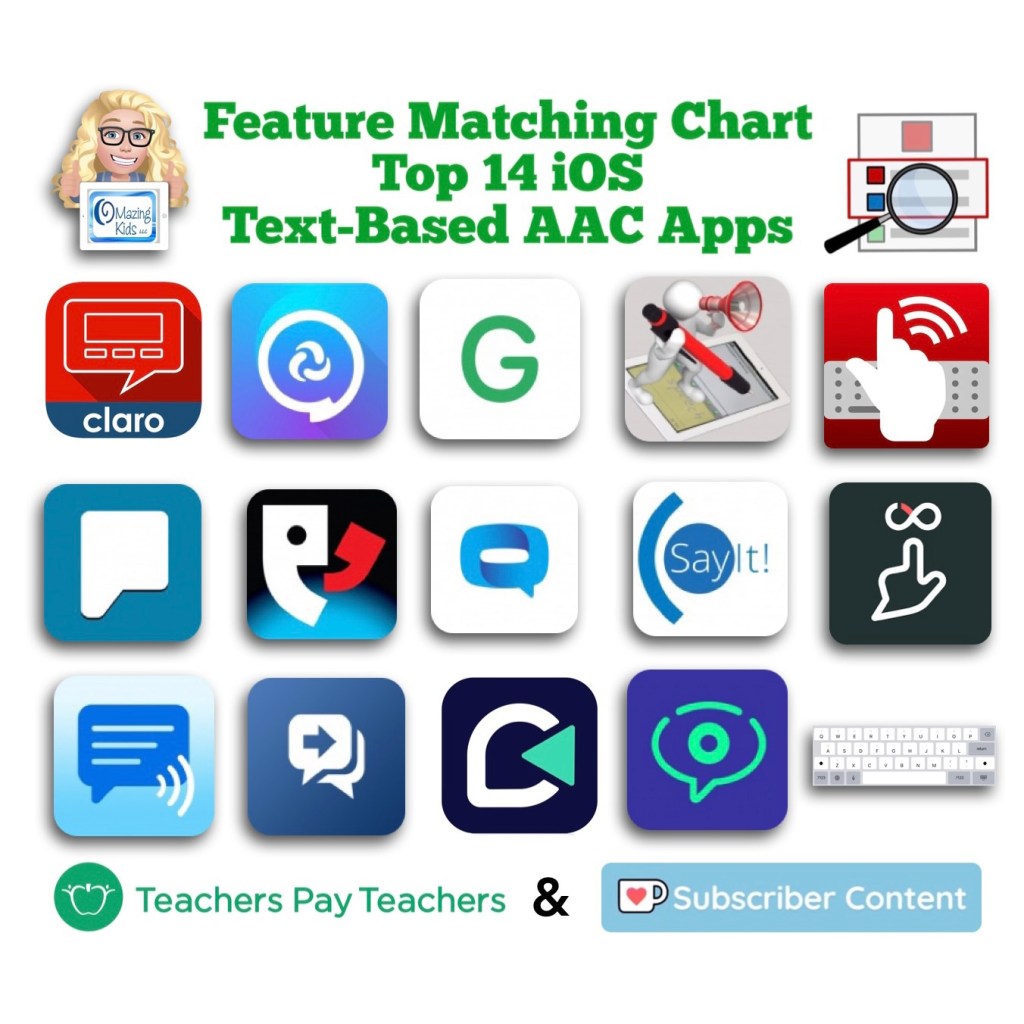
Expanded Resource: The Feature Matching Chart for the Top iOS Text Based AAC Apps has been expanded to add a 14th app (Listen & Speak, due to it having a word bank similar in design to Verbally). Those who have previously purchased this resource on TPT can download the newest version for no additional cost: https://bit.ly/TextBasedAACapps. Ko-fi subscribers will be able to access a copy on the pinned resource post: https://ko-fi.com/Post/Links-to-posts-about-most-current-feature-matching-F1F5C9DMD
Image Description: Screenshot of the cover image for this resource in my TPT (Teachers Pay Teachers) Store. Includes the icon for each app in the Apple App Store, the OMazing Kids logo and logos for TPT and Ko-fi.
Looking for more in-depth up to date AAC feature matching resources? See this blog post: https://bit.ly/5aacFeatureMatchingResources. The most current info about AAC apps can be found in my feature matching resources. The blog post also includes videos comparing AAC apps on various devices on various platforms.
The perfect companion to supplement these in-depth resources are the “AAC Apps and Features At-a-Glance (Single Page Handouts)”: https://bit.ly/AAC-At-a-Glance
Looking for basic info about AAC apps that are always affordable or free? See the Basic Feature Chart for Affordable and Free AAC apps & AAC-Related Apps (iOS, Android Google Play, Amazon Fire, Windows + a few Web-Based options): https://bit.ly/BasicAffordableAACchart.
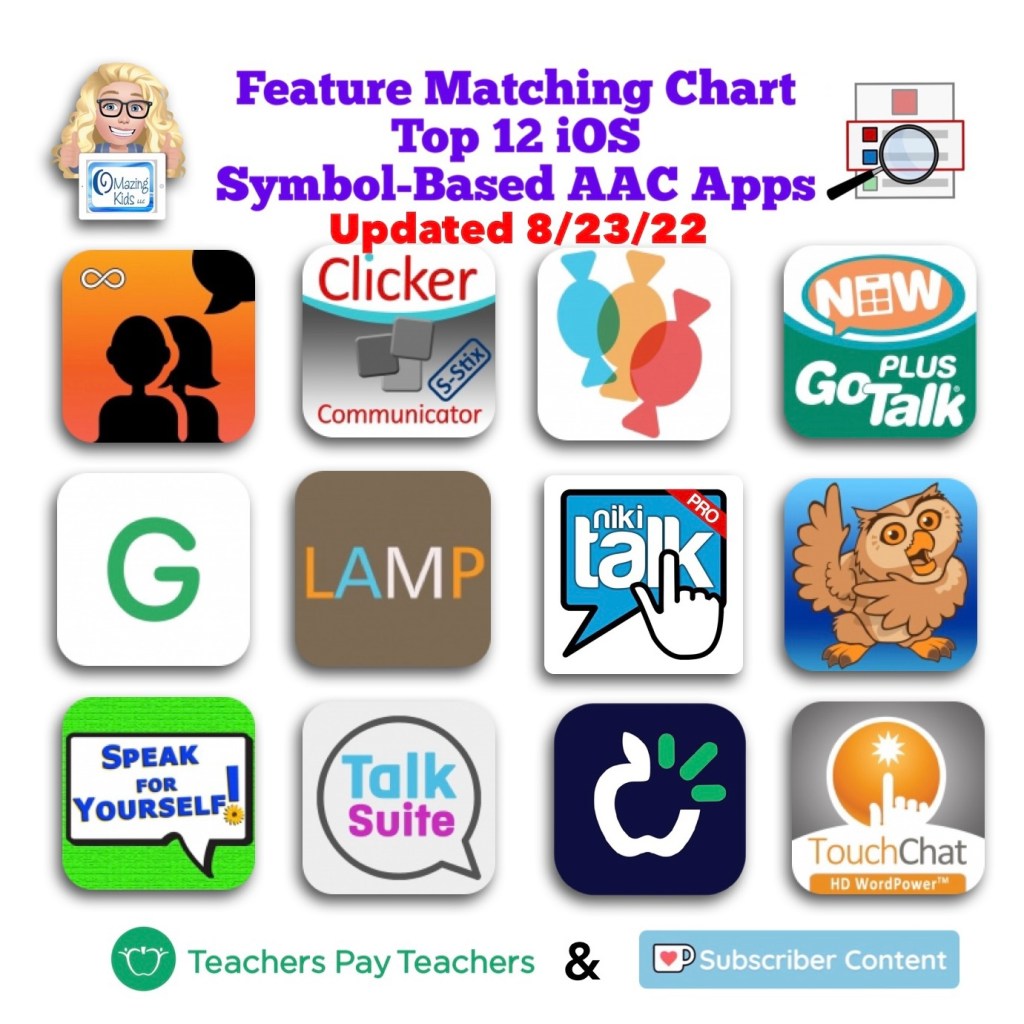
🎉 Resource Update Alert 🎉 8/23/22 Updated Feature Matching Chart for the Top 12 Robust iOS Symbol-Based AAC Apps. Those who have previously purchased this resource can download the latest version for no additional cost on TPT: https://bit.ly/SymbolBasedAACapps.
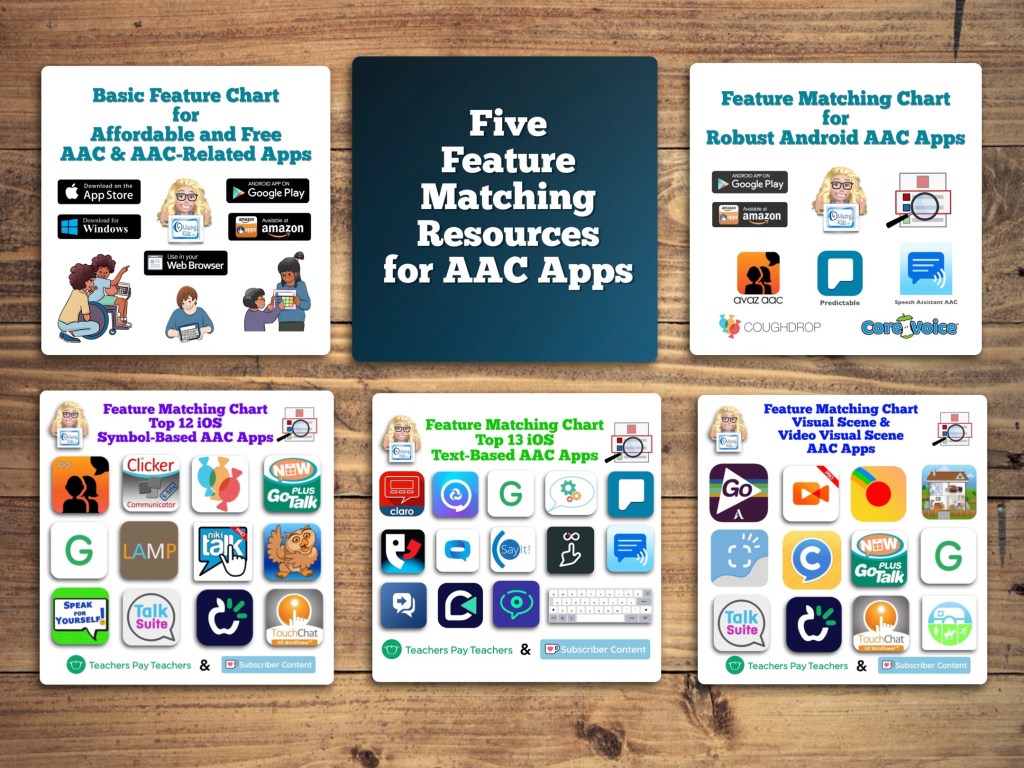
Want more info? See this blog post: Five Feature Matching Resources for AAC Apps (comparing features in AAC apps) + several videos comparing AAC apps across platforms (iPad, Android, Amazon Fire, Windows), https://bit.ly/5aacFeatureMatchingResources
Want a quick way to consider 10 features in AAC apps that may be critical for a particular user’s needs? This recorded webinar + interactive resource makes it simple and then has links for where you can get info for a deeper dive into learning more.
While there isn’t a “perfect” AAC app there are features that might make one a better “fit” over another option.
Finding a good “fit” is similar to taking a test drive to find a form of transportation that you like and meets your needs at that point in your life or in that situation.
The “best” AAC options are the ones that meet the needs of that individual in that situation.
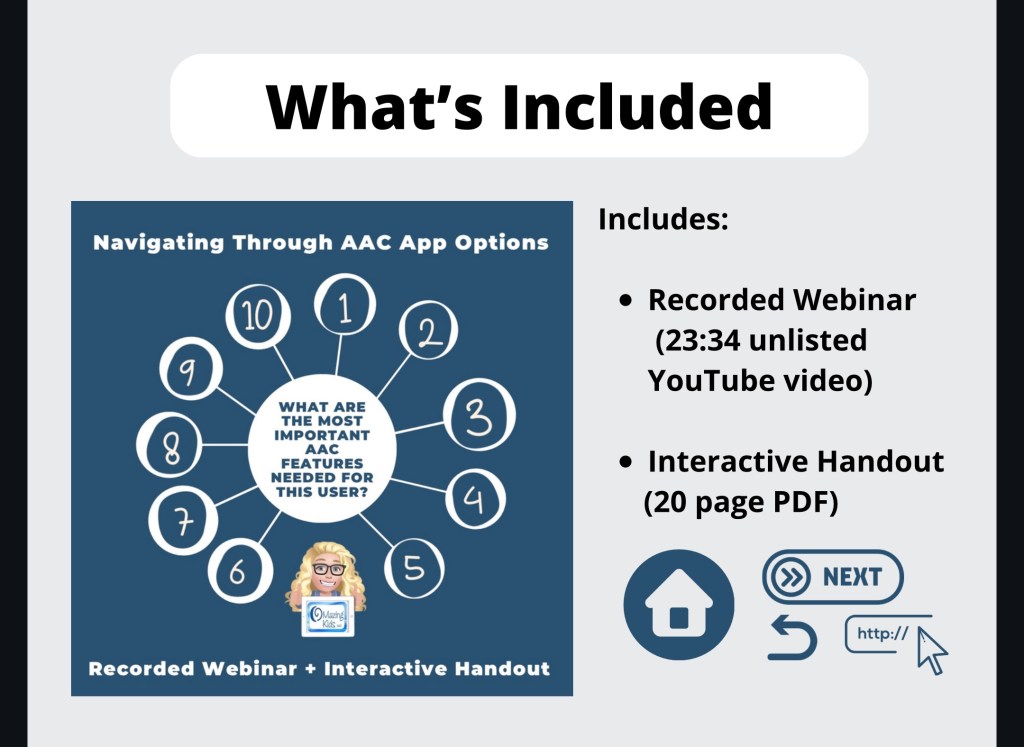
What’s included:
Recorded Webinar (23:34 unlisted YouTube video)
Interactive Handout (20 page PDF)
TPT Preview Video:
Looking for in-depth info about features AAC apps? Check out these resources:
AAC Feature Matching Resource Bundle (includes all three, save 10%): https://bit.ly/aacFeatureMatchingBundle. If you are looking to purchase resources for several staff / team members, take a look at the Multiple Licenses discount (saves 20%)
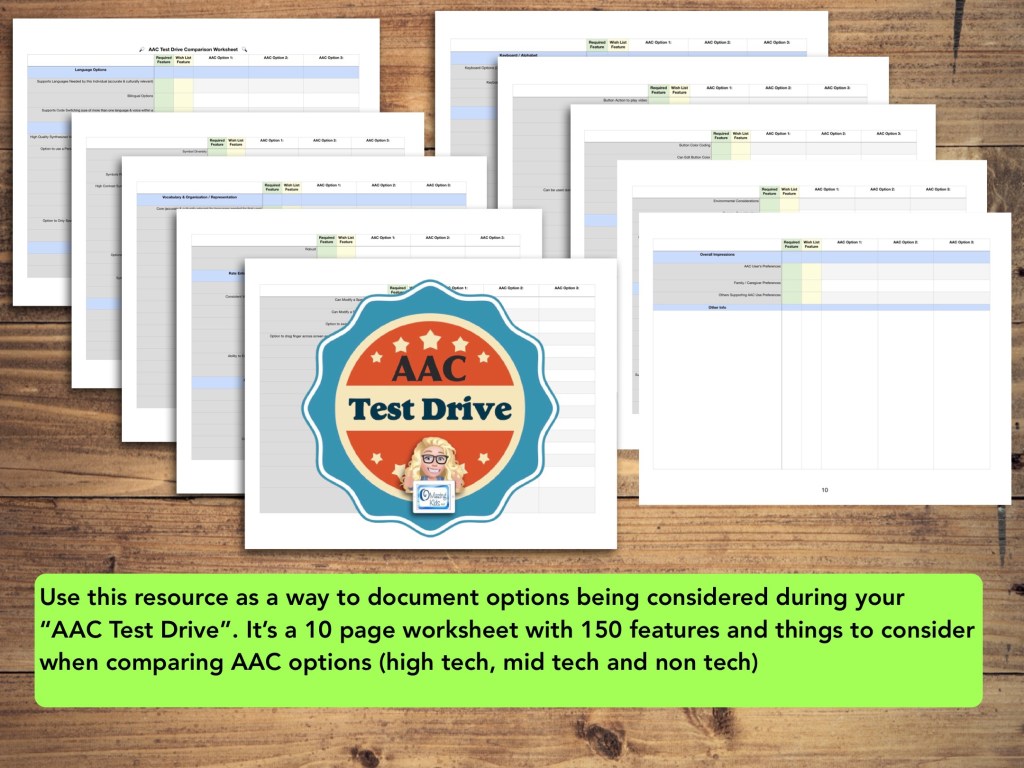
Use this new resource as a way to document options being considered during your “AAC Test Drive”. It’s a 10 page worksheet with 150 features and things to consider when comparing AAC options (high tech, mid tech and non tech): https://bit.ly/AACtestdriveWorksheet
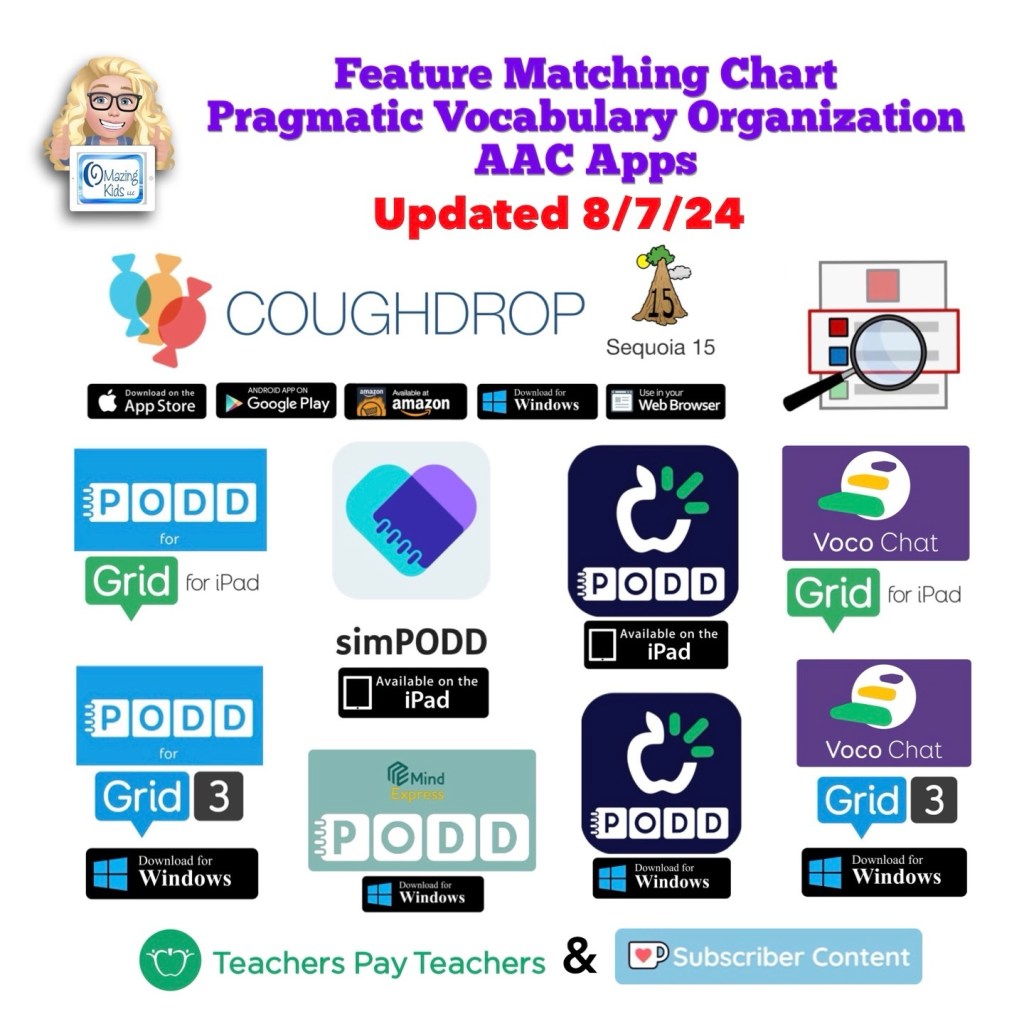
Want in-depth up to date info about the features in these apps? Check out “Three Feature Matching Resources for AAC Apps (comparing features in AAC apps)”: https://bit.ly/3aacFeatureMatchingResources. The chart for symbol-based AAC apps includes a free supplemental handout “Unique Features in Symbol-Based AAC Apps to Support Gestalt Language Processors”.
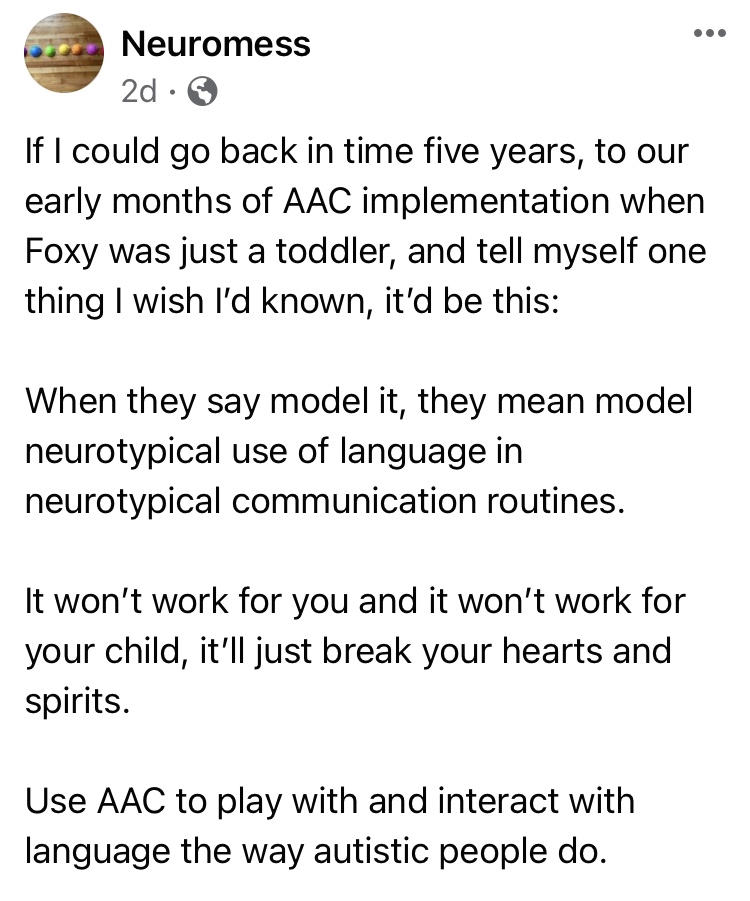
The power of truly embracing and incorporating individual interests into an AAC system and AAC implementation plus customizing for unique needs cannot be overstated.
It is a respectful neurodiversity affirming practice that
builds connections
fosters AAC ownership
resonates with them
allows for authentic communication
AAC systems and many AAC implementation strategies were designed with Analytic Language Learners in mind.
There are things that can be done to personalize an AAC user’s device that don’t involve changing any of the layout. I’ve seen way too many kids, teens and young adults who were deemed “unable” or “not ready” to use AAC or who showed little to no interest in using it until we involved them in choosing and in customizing an AAC system that resonated with them. What sparks that interest and joy is highly individualized but when you experience that it’s magical.
While we don’t yet have “scientific research” related to AAC for Gestalt Language Processors, we do have Clinical Expertise and Client/Patient/Caregiver Perspectives.
Combine good AAC practices (presume potential, form authentic connections, engage in fun child-led activities based on their unique interests, accommodate sensory needs, model AAC use without demands, etc.) with a Natural Language Acquisition approach.
And read this The North Star and the Compass Facebook post with Canva links: A year in the life of one creative communicator (Speak for Yourself, Pictello, Spotify, Proloquo2Go as AAC). How do you truly follow a kid’s lead when they do unexpected things with their AAC?
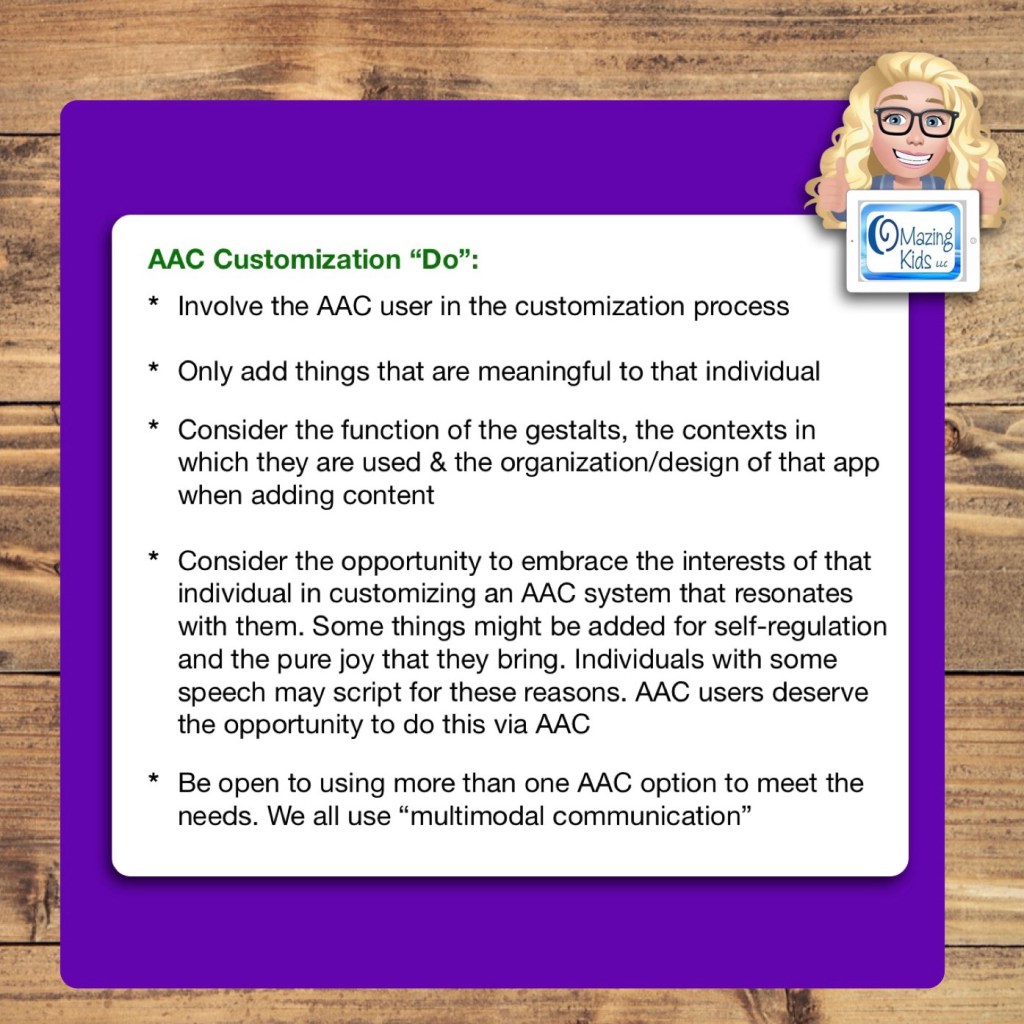
Only add things that are meaningful to that individual
Consider the function of the gestalts, the contexts in which they are used & the organization/design of that app when adding content
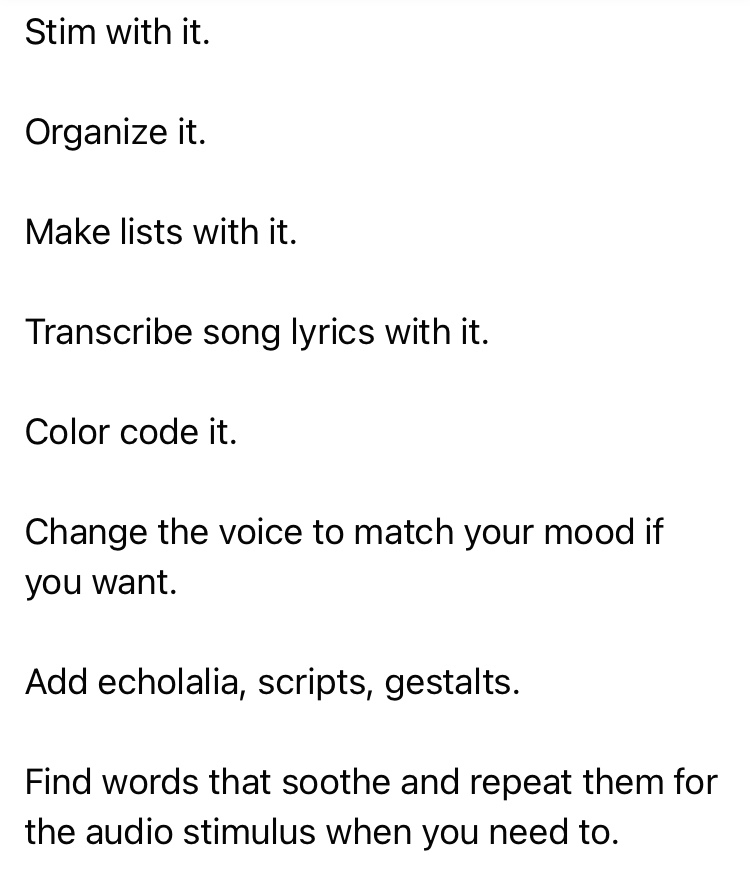
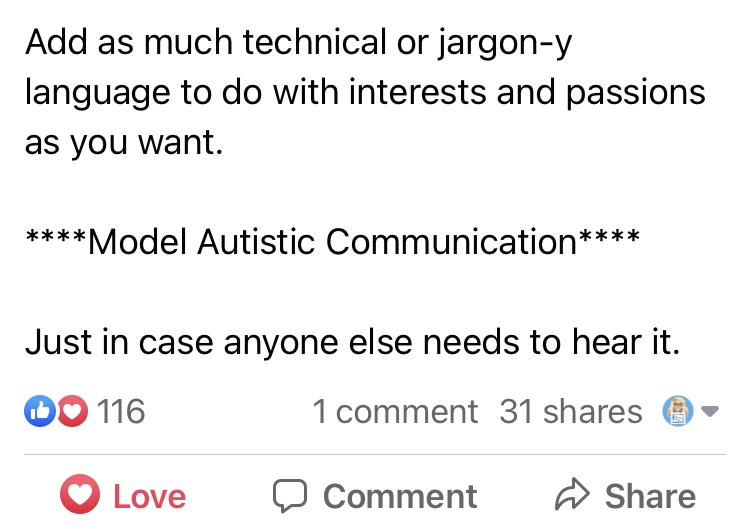
Consider the opportunity to embrace the interests of that individual in customizing an AAC system that resonates with them. Some things might be added for self-regulation and the pure joy that they bring. Individuals with some speech may script for these reasons. AAC users deserve the opportunity to do this via AAC
Be open to using more than one AAC option to meet the needs. We all use “multimodal communication”
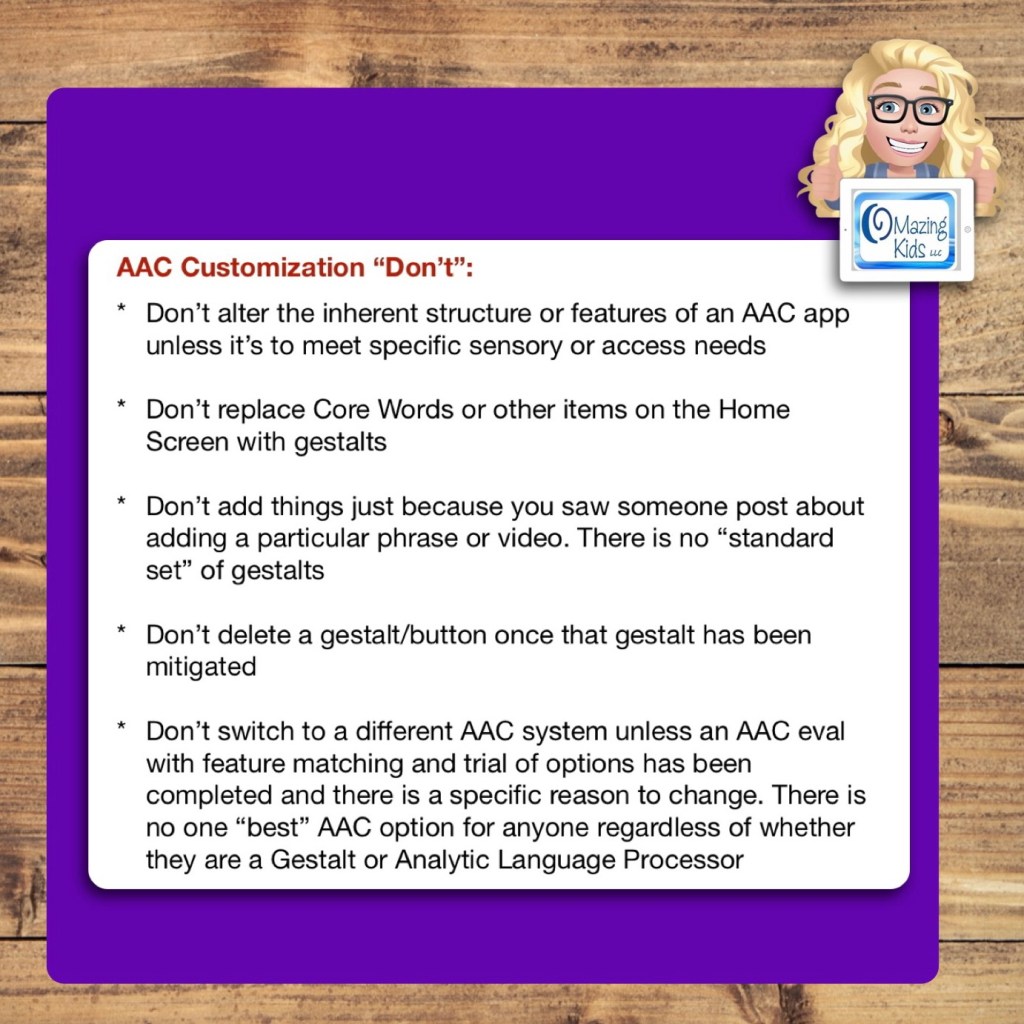
AAC Customization “Don’t”:
Don’t alter the inherent structure or features of an AAC app unless it’s to meet specific sensory or access needs
Don’t replace Core Words or other items on the Home Screen with gestalts
Don’t add things just because you saw someone post about adding a particular phrase or video. There is no “standard set” of gestalts
Don’t delete a gestalt/button once that gestalt has been mitigated
Don’t switch to a different AAC system unless an AAC eval with feature matching and trial of options has been completed and there is a specific reason to change. There is no one “best” AAC option for anyone regardless of whether they are a Gestalt or Analytic Language Processor
Want to learn more about AAC feature matching (comparing features and matching them to an individual’s needs)? Check out the three feature matching resources: https://bit.ly/3aacFeatureMatchingResources. The feature matching resource for the symbol-based AAC apps includes a free supplemental handout “Unique Features in Symbol-Based AAC Apps to Support Gestalt Language Processors”. It has info related to all 12 apps + additional info about features in 8 free and affordable symbol-based AAC apps (mainly iOS, some Android and a couple of Windows) priced $2.99 or less.
Looking for a customizable non-tech printable AAC flip book? See my resource “TD Snap: a visual guide to getting started”. It includes free Bonus Content: access to a 10 page printable AAC flip book specifically designed with Gestalt Language Processors in Stage 1 – Stage 2 of the Natural Language Acquisition (NLA) process in mind + the option to request an editable version in TD Snap. The free bonus handout includes instructions for printing, cutting out and assembling + a video): https://www.teacherspayteachers.com/Product/TD-Snap-a-visual-guide-to-getting-started-more-bonus-AAC-flipbook-7445593
Looking for in-depth AAC feature matching resources? See this blog post: https://bit.ly/5aacFeatureMatchingResources. That post also includes videos comparing AAC apps on various devices on various platforms.







 OMazing Kids AAC Consulting