Angela Moorad, MS, CCC-SLP. Over 36 years experience in AAC. OMazing Kids AAC and app consulting. Creator of several AAC Feature Matching resources (https://omazingkidsllc.com/omazing-kids-aac-resource-links/). Includes info about unique features to support Gestalt Language Processors
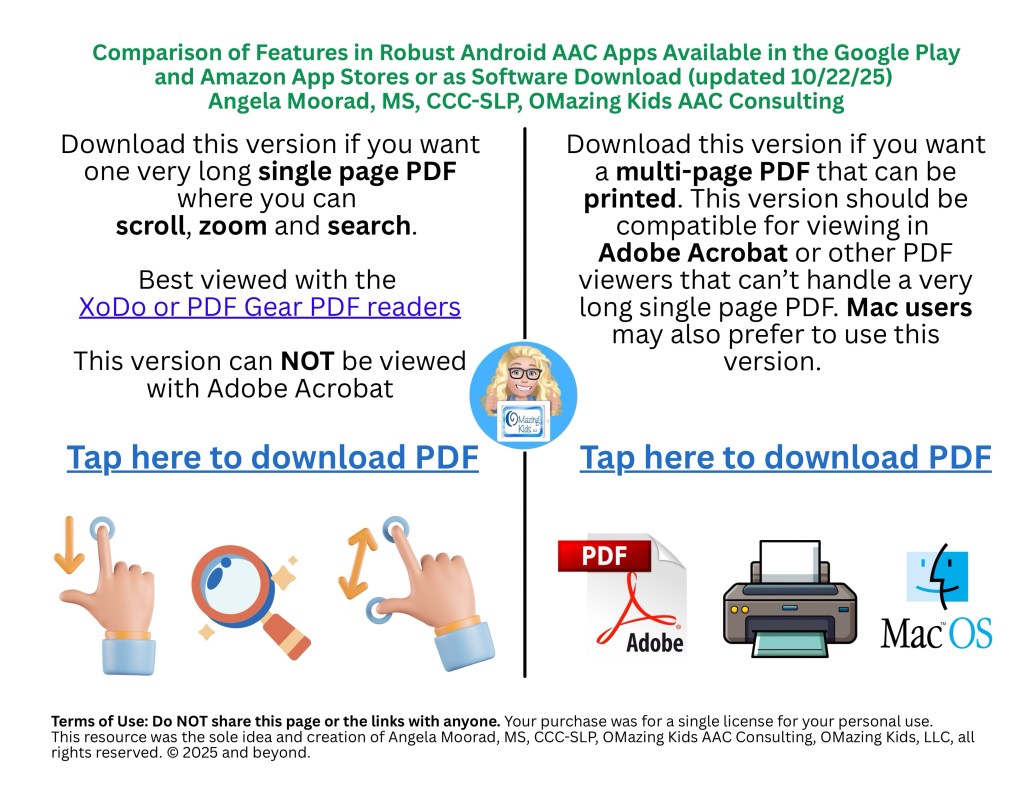
Added a new Landing Page to help folks choose which version of this resource you need (a single long page PDF where you can scroll, zoom and search OR a multipage PDF for those who want to print, view it in Adobe Acrobat or on a Mac computer)
Looking for other in-depth AAC feature matching resources? See this blog post: https://bit.ly/5aacFeatureMatchingResources. That post also includes videos comparing the best AAC apps on various devices on various platforms.
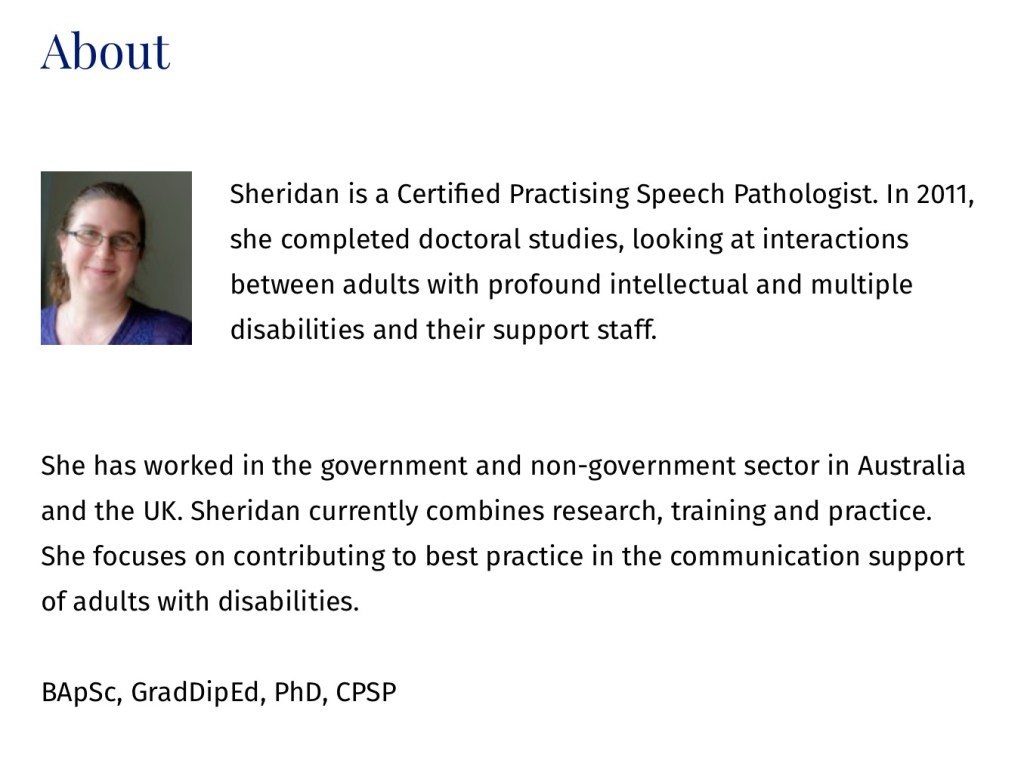
I was honored to be invited to make a guest post about my work.
I am not going to be talking about apps or devices or symbol sets.
I am going to talk about meeting a person with a communication disability. Perhaps a person who has a severe or profound intellectual disability, or perhaps they don’t.
The first question in my mind is “How do I need to be in order to be with you?” This might include where I sit, the speed and complexity of speech or not using speech, the amount of eye gaze, use of touch, degree of directness in interaction or referring more to the things around us. I observe what is responded to and what is not. I adjust what I do with an open mind to the needs for accommodations. I look for the sweet spot in which there seems to be some shared meaning, perhaps indicated in a lingered gaze, a leaning in, a responsive initiation directing the next step in our engagement.
Everyone I meet communicates expressively and receptively – and this is no exception for people with severe or profound intellectual and multiple disabilities. This might be their ALTERNATIVE communication to speech. They might communicate with symbols or without symbols. I explore how to fit myself to their receptive abilities and promote their expressions in each moment of engagement.
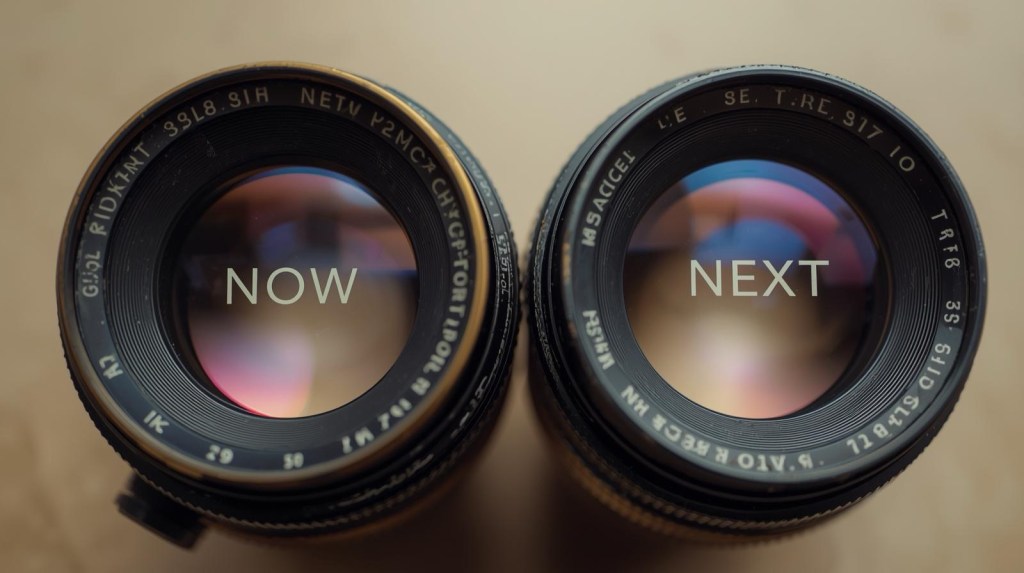
I consider things from the NOW and NEXT lens.
How are they communicating today, and how do I fit into that present way of communicating? For some people, communicating with them in a way that meets their current communication needs is lacking. For the person who engages best through touch, eye gaze, and a person sitting in physical contact to feel their changes in muscle tone with pleasure or displeasure, too often they are surrounded by partners relying solely on using speech towards them that they may not hear or process.
The first principle of my work is to guide interactions towards meeting current communication needs. This is no easy task when people may require highly individualised forms of communication and a cultural shift around them. Sadly much research has indicated that proffered interactions can be few and far between in group homes, can be unattuned to individual communication levels, and can ask partners to interact in a new way.
Much of my work is seeing when interaction does work and promoting this. A staff member sitting on the floor is recognised as attunement. A staff member repeating back the sounds of a person is seen as having a conversation without words that enables reciprocity. Seeing someone actively interpreting the movements of someone towards them is celebrated as valued social engagement – much like the relational doses discussed by Bruce Perry in the Neurosequential Model of Therapeutics.
Getting NOW communication right can be the entire focus of communication supports. Often latent (skills always there but rarely showed) communication skills and sometimes new skills may arise through better attuned interaction.
This dynamic, moment to moment engagement involves far more than what might be written in a gesture/symbol dictionary or communication profile. Often the dynamics of sustained engagement are best captured through video recordings and rich discussions of the possibilities inherent in real engagement.
Sometimes NEXT communication skills might be worked on. But these are never worked on in isolation to the NOW communication skills. A firm foundation or shared meaning using what the person can do now is needed to build new skills.
For some people learning new skills is difficult and for some even maintaining present skills can be a challenge. It is perhaps analogous to a first and second language. For some people, their first language might be body language, facial expression, and sounds. Perhaps we aim to teach them a second language of pictures for communication. If we only speak to them using a second language that they have not mastered, there might be an absence of shared meaning. However if we maintain the use of their first language (albeit not a symbolic language), we maintain some form of shared meaning – such as a delight or interest expression – fundamental indications that the person is being noticed, witnessed, worthy of sincere attention and sharing of experiences.
“How do I need to be in order to be with you NOW and possibly NEXT?” is my starting point with each individual.
Want to learn more?
Join the “HOP: Hanging Out Program” Facebook group – a group focusing on people with severe or profound intellectual disabilities, bringing together research, good practice, and ethical considerations: https://www.facebook.com/groups/hangingoutprogram
Note from Angela: I invited Sheridan to do this guest blog post during AAC Awareness Month to help boost the signal of her very important work. I enjoy the deep perspectives and resources that she shares in her Facebook group and I admire her willingness to speak up when online discussions in other groups become too narrowly focused on symbolic communication and high tech AAC.
11/1/25: A must read related post by N of 1 on Facebook:
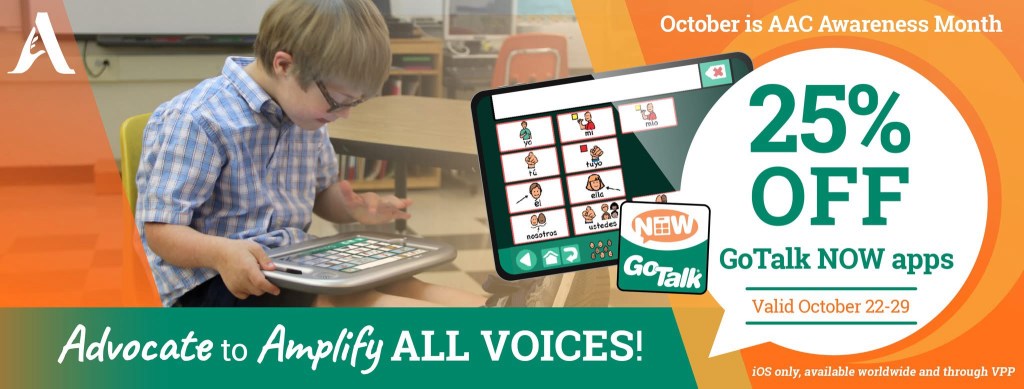
If you are looking for an AAC option that will reliably and easily include videos and music files stored on that iPad that have been linked to play on a button then GoTalk Now is a tool that you should consider adding to your AAC toolkit.
When you export a Communication Book from GoTalk Now (or GoTalk Now Plus) using the “Share Compressed Book” option it fully embeds and includes all videos, music files, recorded audio, photos, etc.. and reliably includes those when backing up and sharing.
That’s why I recommend GoTalk Now (or GoTalk Now Plus) as a supplemental tool in the AAC toolbox for those who will be using lots of video clips or music.
Note: The free GoTalk Now Lite and inexpensive GoTalk Start versions of this app do not have a way to backup or share.
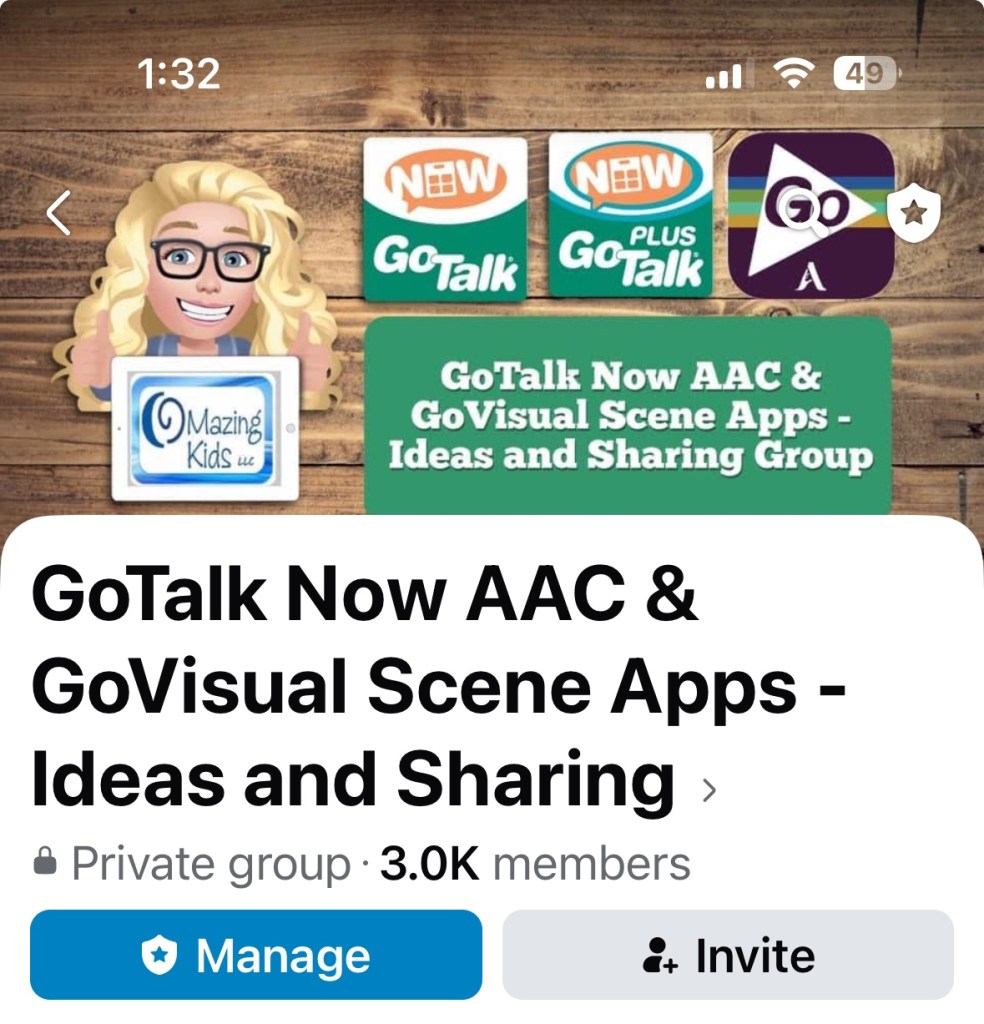
Feel free to join my GoTalk Now AAC & GoVisual Visual Scene Apps – Ideas and Sharing Facebook Group:https://bit.ly/GoTalkNowAACappGroup. There are now two staff from Attainment Company, Inc. in the group.
Be sure to answer the questions when requesting to join and if you invite folks to join be sure they answer the questions. That’s how I keep the group secure from spammers.
Looking for in-depth AAC feature matching resources? See this blog post: https://bit.ly/5aacFeatureMatchingResources. That post also includes videos comparing the best AAC apps on various devices on various platforms.

 OMazing Kids AAC Consulting